Europe Nook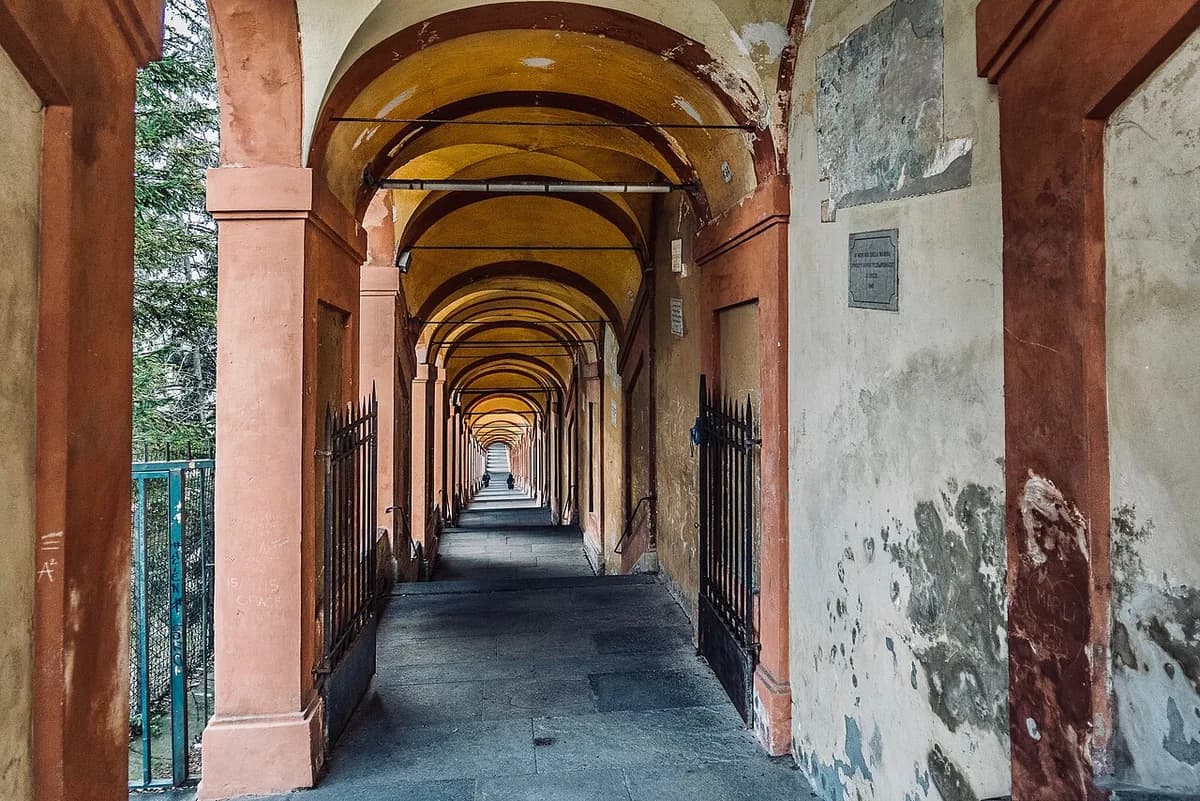
Reviewed October 2026, this guide gives a direct answer before you start the Bologna San Luca walk: is the climb worth it, and how long does it take? The route runs from central Bologna, under a covered portico, up to the Sanctuary of San Luca on the hill above the city. Most fit walkers cover it in 45 minutes to just under two hours, depending on which start point gets counted, so this guide reconciles the conflicting figures and lays out bus, tourist-train, taxi, and bike alternatives for anyone who wants a different way up or down.
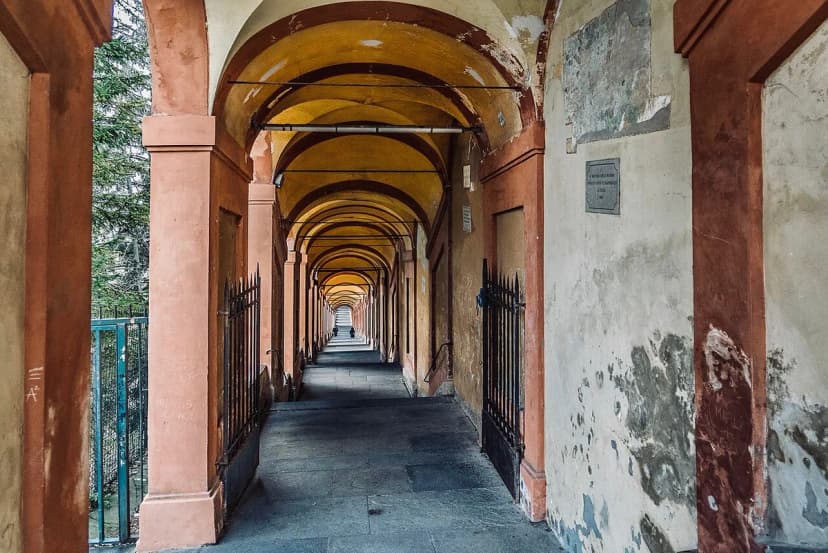
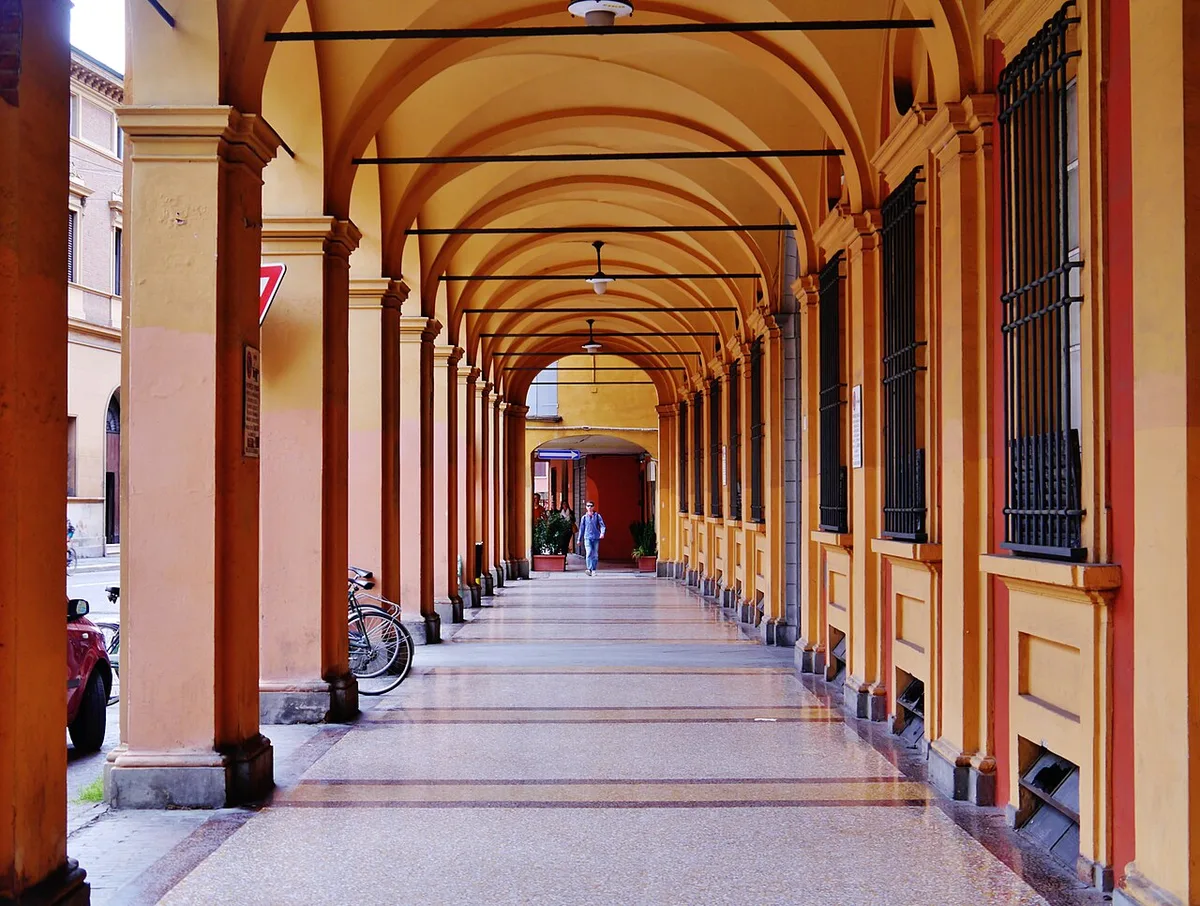
Featured image: Covered portico on the San Luca walking route. Photo: Vanni Lazzari, CC BY-SA 4.0, via Wikimedia Commons. Resized and converted to WebP.
Quick answer: is the Bologna San Luca walk worth it, and how long does it take?
Allow roughly 1–1.5 hours from Porta Saragozza uphill at an unhurried pace, with a similar distance to retrace. From Piazza Maggiore add the approach to the gate. These are planning allowances, not measured walking times; reserve a half day for a relaxed return walk and visit.
The walking route from Piazza Maggiore to the Sanctuary of San Luca
Start at Piazza Maggiore and head down Via Saragozza toward the old city gate. Porta Saragozza marks the official start of the covered portico and the point most sources use to measure distance and time. Under the portico, the walk stays flat for around 1.5 km through a residential stretch with cafés and shops. Portico di San Luca then crosses the road and forms the Arco del Meloncello, built in 1732 to a design by Carlo Francesco Dotti. This arch marks the halfway point and the start of the steep section. From here, the remaining stretch of portico climbs past 15 chapels depicting the Mysteries of the Rosary before reaching the sanctuary. The return follows the same portico back down to Arco del Meloncello and Porta Saragozza, then continues inside the old walls past the Collegio di Spagna to Piazza Maggiore. This walk also works well as one leg of a longer outing; see the self-guided walking routes for how to combine it with other stops.
- Arriving by train: check train times into Bologna Centrale in advance; the train station guide covers the walk from Centrale into the historic centre.
- Arriving by coach: the bus station guide covers the onward route to Piazza Maggiore.
- Arriving by air: same-day arrivals can check the airport transfer guide before heading to the start point.
- Bologna Centrale itself handles regional, intercity, and high-speed trains from across the country, according to Bologna's official trip-planning page.
Alternative route via Casalecchio and Parco della Chiusa
A second, less crowded route starts in Casalecchio di Reno, at the Church of San Martino, reachable by bus 20 from central Bologna. From there, the path continues into Parco della Chiusa, also known as Talon. Before recent flooding, walkers climbed the Sentiero dei Bregoli, a demanding 1.7 km woodland path. Bologna Welcome's route page, updated in October 2025, states that this path is currently unusable. It points instead to a panoramic alternative, the Via Panoramica, which climbs via Montagnola di Mezzo and connects to Via Monte Albano behind the sanctuary. Confirm current trail status before relying on this approach, since conditions on unpaved park paths can change without much notice.
The Sentiero dei Bregoli's 1.7 km woodland route parallels the main path's 1.5 km flat opening but is currently unusable due to recent flooding.
Getting to the San Luca walk without walking: bus, tourist train, taxi, and bike
For public transport, check TPER’s current connection to Villa Spada and the limited line 58 service up the hill. Validate on each boarding and make sure your ticket remains valid for the complete trip. The ticket guide explains city fares.
The San Luca Express operator currently lists Piazza Galvani as the central return point, beside the Piazza Maggiore area. The ordinary adult return is €15; the exact departure stop and time are on the booking confirmation. Some departures require you to get off at the sanctuary and return on a later run, making the outing at least two hours. A wheelchair space must be arranged directly with the operator. See the tourist train guide.
A taxi is another option if the bus timetable does not fit. Ask for a quote and agree how you will return; do not expect taxis to wait at the hilltop. Cycling requires confidence on steep roads and is not a substitute for a step-free walking route.
How much time to budget for the walk and visit
Allow a half day if walking from central Bologna to the sanctuary and back with time to visit. A planning estimate of 1–1.5 hours uphill from Porta Saragozza is more comfortable than treating the walk as a timed fitness effort. Add the approach from Piazza Maggiore and a similar return distance. Rest stops, steps and heat can all increase the time.
Best time of day and season to walk to San Luca
Check the sanctuary’s current visiting hours before an early or late walk; access to the portico does not guarantee entry to the church or viewpoint. Avoid planning the climb around an old blog’s opening time.
What's at the top and along the way
Any optional dome or terrace visit has separate access rules and hours. Check availability at the sanctuary and do not assume that a tourist-train ticket or Welcome Card covers every paid viewpoint.
- Villa Spada: sits near the lower approach to the walking route, with Italian-style gardens and a small library, useful as a rest stop with kids.
- Certosa di Bologna: a monumental cemetery complex functioning as an open-air museum, in the lower city near the Meloncello side, rather than beside the hilltop sanctuary.
- Villa delle Rose: an exhibition space in a historic villa in the same area, for travelers with extra time.
- Stadio Renato Dall'Ara: Bologna's football stadium is visible from parts of the climb but is not generally open outside matchdays.
Mistakes to avoid and practical prep
Wear real walking shoes; much of the climb near the top is stairs, and the surface gets slick when wet. Carry water, since the uphill stretch offers limited relief from heat even under cover. Sources disagree on facilities past the Arco del Meloncello: one guide states there are none beyond that point, while a separate reader account mentions a donation-based restroom at the sanctuary itself. Plan as if facilities are not guaranteed, and use a restroom before setting out. If mobility is a concern, the bus, taxi, or San Luca Express are more realistic options than the uphill portico, which has no step-free workaround for its stairs.
- Use the restroom before you leave; don't count on facilities along the route.
- Bring water regardless of season.
- Skip flip-flops or a rolling suitcase; the stairs near the top aren't built for either.
- Doing the walk on a checkout day? The luggage storage guide covers where to leave bags near the centre first.
See our Bologna tourism attractions guide for the broader city overview.
Plan another day from Bologna
Keep a separate day for the car-free trips from Bologna. Choose a destination by the time available after getting to Centrale, rather than using the train journey alone as your total travel time.
Sources and review
Reviewed 6 October 2026 against the official pages below. Timetable searches, ticket availability and temporary operating notices still need checking for your own travel date. Walking times and itinerary allowances are editorial estimates.
Frequently Asked Questions
Can you walk to the Sanctuary of San Luca?
Yes. Walking is the traditional route, starting at Porta Saragozza where the covered portico begins. The path stays under cover the whole way, so it's hard to get lost, and it's accessible around the clock, though sanctuary opening hours are separate from the portico itself.
How long does it take to walk to San Luca?
Allow roughly 1–1.5 hours uphill from Porta Saragozza, plus the approach if starting at Piazza Maggiore. Retrace the same distance on the way down and allow time to rest; a half day is a comfortable planning allowance.
What's inside the Sanctuary of San Luca?
The sanctuary houses the Madonna icon. Any paid dome or terrace access must be checked separately for current hours and availability.
Is there a bus or train to San Luca?
A limited city-bus connection reaches the hill via Villa Spada and line 58; check the current TPER timetable. The San Luca Express is a tourist road train or minibus, not a railway service; confirm the Piazza Galvani-area boarding point on your ticket.
Is the San Luca walk worth it?
For most travelers who can manage stairs and a sustained uphill grade, yes. It combines a UNESCO-recognized portico, a genuine city viewpoint, and a free, weather-protected route in one outing. Travelers with mobility limitations are usually better served by the bus, taxi, or tourist train instead.
What else is worth seeing near San Luca?
Villa Spada park sits near the lower approach to the walking route and makes a good rest stop. Certosa di Bologna, a monumental cemetery complex, is a separate detour in the lower city, not a short walk from the sanctuary. Villa delle Rose, an exhibition space in a historic villa, is also in the area for travelers with extra time.