 Europe Nook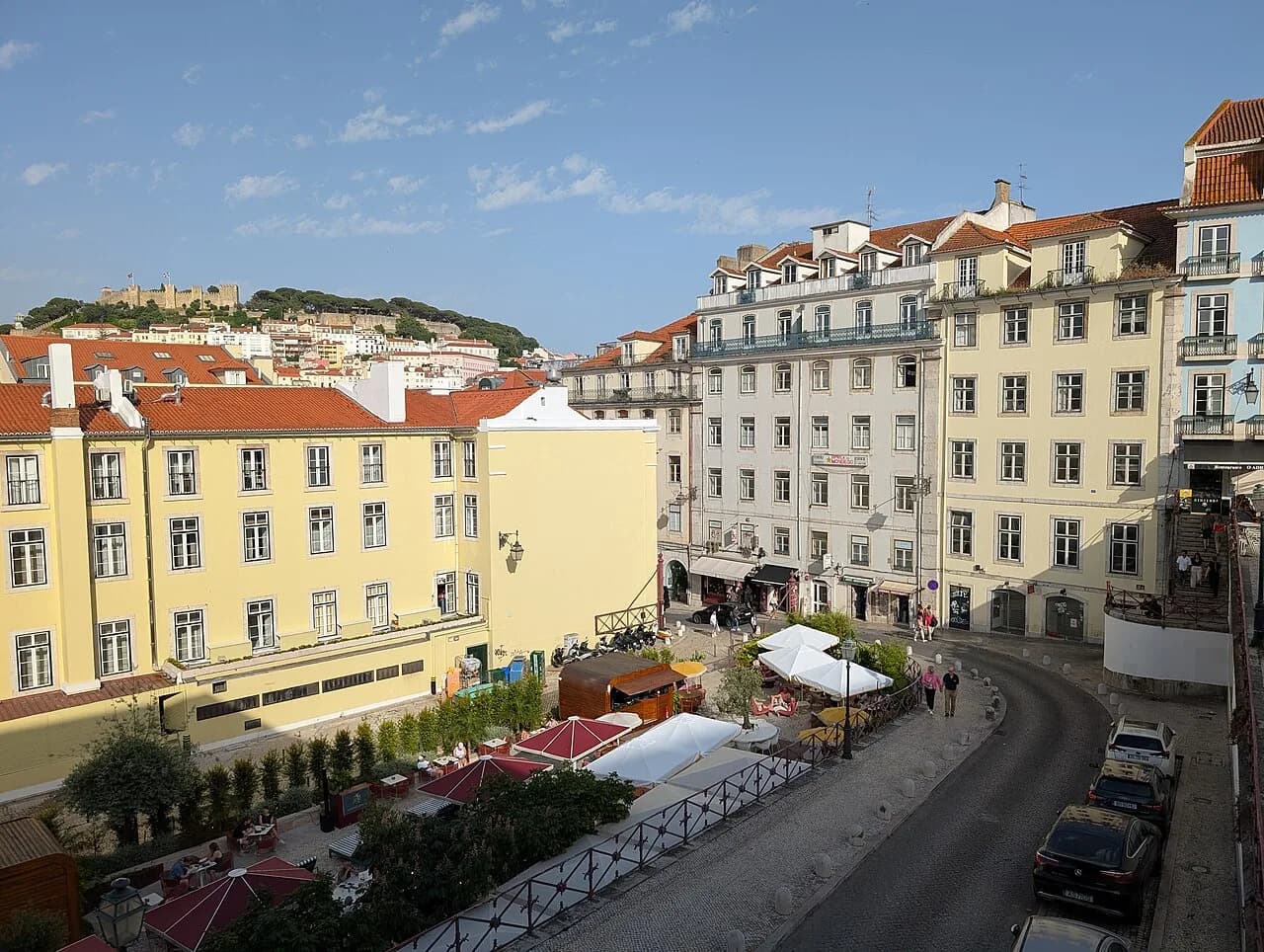
Last updated September 2026, this self-guided Lisbon walking tour links Praça do Comércio, Baixa, Chiado, Alfama and Castelo de São Jorge into one car-free loop. You can walk it without a guide or tour bus, following named stops instead of turn-by-turn directions. The route flags the main steep climbs, points to rest stops at the miradouros along the way, and includes a flatter shortcut for anyone short on time or stairs. For a longer stay, combine this city walk with a separate day trip from Lisbon by public transport, allowing a full return-travel plan for the excursion.
Featured image: Philip Mallis from Melbourne, CC BY-SA 4.0, via Wikimedia Commons. Resized and converted to WebP.
Self-Guided Lisbon Walking Tour: Route at a Glance
This self-guided Lisbon walking tour runs as one loop, starting and ending near the river. You don't need a car, a tour bus or a booked guide to follow it. It splits into four stages: the flat Baixa grid, the climb into Chiado, the steep lanes of Alfama, and the final push up to Castelo de São Jorge. Each stage below names a possible rest stop. The shorter Baixa-only option avoids the uphill stages; Chiado remains an optional climb, not part of that flatter alternative.
| Stage | Area | Terrain | Rest Stop |
|---|---|---|---|
| 1 | Praça do Comércio to Rossio | Flat, paved | Rossio square cafés |
| 2 | Rossio to Praça Luís de Camões | Moderate climb | Chiado kiosk |
| 3 | Sé Cathedral through Alfama | Steep, uneven cobbles | Miradouro de Santa Luzia |
| 4 | Castelo de São Jorge approach | Steepest climb | Miradouro das Portas do Sol |
Getting to the Start at Praça do Comércio
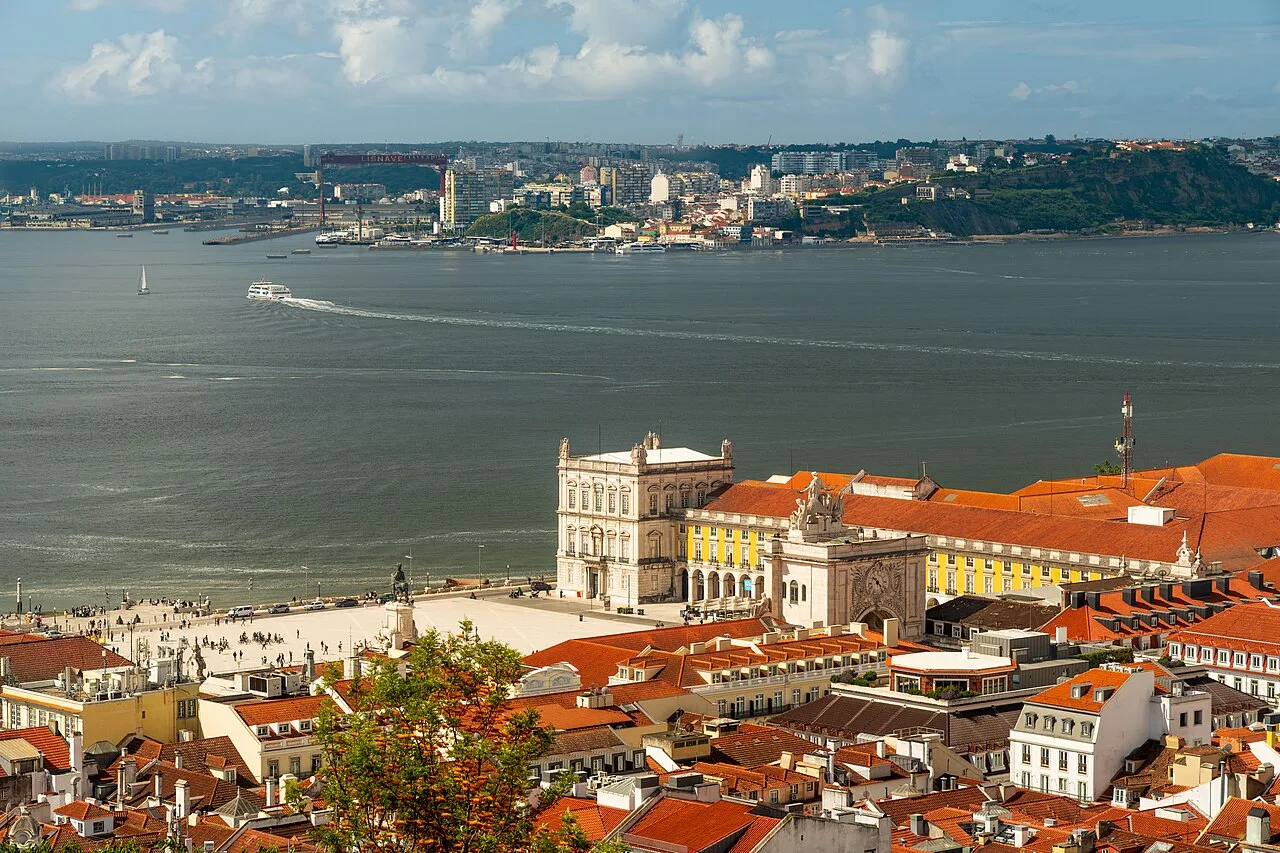
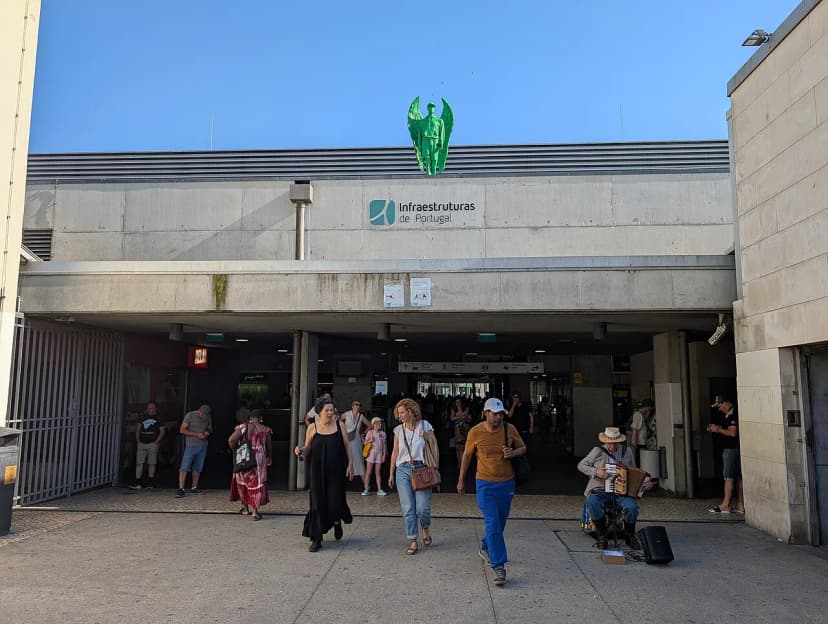
Praça do Comércio sits on the river, close to Baixa-Chiado on the metro and a short walk from the Cais do Sodré ferry terminal. Arriving from the airport, the airport transfer guide covers the metro and bus routes into central Lisbon. If you're arriving by regional or intercity train, the train stations guide covers which terminal you'll land at and how to reach Baixa from there. Rossio and Cais do Sodré, the two stations closest to this walk's start, both appear on CP's Lisbon network page, which lists the urban lines that call there. Coach arrivals can check the bus station guide for the walk or metro connection into Baixa. Before you set off, the metro ticket guide explains how to buy or top up a Viva Viagem card at the station machines, useful if you plan to ride part of the way back.
Stage One: The Flat Baixa Grid to Rossio
From Praça do Comércio, walk under the Arco da Rua Augusta and follow the pedestrianised Rua Augusta north. This stretch is flat, paved and lined with cafés, so it works as an easy warm-up before the hills start further along the route. Rua Augusta's grid of parallel streets is easy to wander off and back onto without losing your way, since Baixa was rebuilt on a regular street plan. Rua Augusta ends at Rossio, Baixa's main square, where the wave-patterned cobblestone paving and surrounding 18th-century buildings make a natural stopping point. Treat Rossio as this stage's rest stop: benches, cafés and open shade give you a chance to sit down before the climb into Chiado.
Stage Two: Climbing Into Chiado, and the Steeper Detour Above It
From Rossio, the ground starts to rise as you head toward Chiado. Follow Rua do Carmo uphill, then turn onto Rua Garrett and continue toward Praça Luís de Camões. These are successive streets, not parallel alternatives. This uphill shopping-street route leads to the square, Chiado's main square and this stage's rest stop, where a small refreshment kiosk gives you somewhere to sit rather than push straight on. From the square, a steeper detour climbs further to Miradouro de São Pedro de Alcântara, a garden viewpoint looking back over Baixa and out toward the castle. Treat that detour as optional: it adds a genuinely steep uphill stretch and is easy to skip if your legs, or your schedule, say no.
Stage Three: Sé Cathedral Into Alfama's Steep Lanes
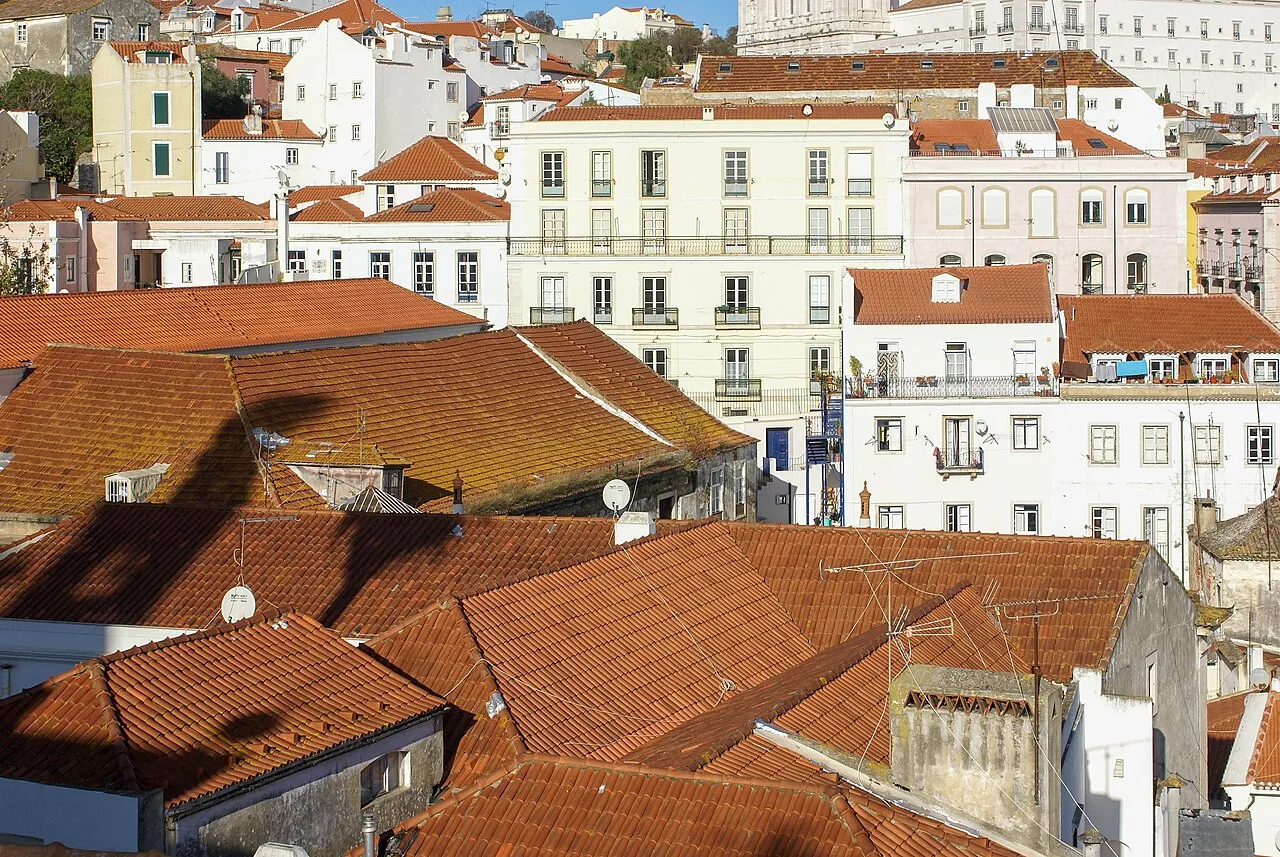
Head back down toward Baixa and across to Sé Cathedral, at the edge of the Alfama district. From here, the streets narrow, the cobbles get uneven, and the route climbs and drops in short, steep bursts rather than one long slope. Expect stairs in places, and budget extra time if you're travelling with limited mobility or heavy bags. Tram lines run through this stretch of Alfama. As of this update, Carris has a three-week alteration to routes 12E and 28E starting at 08:00 on 31 August 2026, while a street near Graça stays closed. Do not count on either tram running its usual full route during this period. Full current details for tram 28 sit in its route guide. Tram 12's temporary tram and replacement-bus arrangements has its own page too. Past the cathedral, follow the lanes toward Miradouro de Santa Luzia, this stage's rest stop, a shaded, tiled terrace with river views. Use it to catch your breath before the final climb to the castle.
Stage Four: Castelo de São Jorge and the Final Climb
From Miradouro de Santa Luzia, Miradouro das Portas do Sol sits a few steps further on and makes a second, larger viewpoint before the last climb. Castelo de São Jorge's approach is this route's steepest stage, gaining height steadily over cobbled lanes and a few staircases. Check the castle’s official visitor information for current tickets, opening hours and access arrangements before choosing an interior visit. If you'd rather not pay to go inside, the free miradouros you've just passed offer river and rooftop views without an entry fee, so skipping the interior doesn't mean skipping the views. Ramparts inside the castle grounds add another vantage point over the Tagus estuary if you do go in.
Allow roughly 60–90 minutes as a planning estimate for a castle visit, plus any queue. Add that time to the walking route if you want an unhurried visit; it is not a required or guaranteed visit duration.
Why Alfama's Lanes Feel Like a Maze
Baixa was rebuilt on a grid after the 1755 earthquake, while Alfama's older street pattern survived. That history is why Alfama's lanes twist more than Baixa's straight blocks, and why a phone map sometimes struggles to keep up in real time. Expect dead ends and stepped alleys rather than a strict grid, and treat a wrong turn as part of the walk rather than a mistake to correct immediately. If you'd rather not improvise, stick to the named stops in stage three and use them as checkpoints between the maze-like stretches.
Do You Need a Transport Pass for This Walk?
Most of this route runs on foot, so you don't need a transport card just to walk it. If you're combining the walk with metro or bus rides before, during or after it, such as returning from near the castle, compare the cost tradeoffs on the Lisboa Card versus Viva Viagem guide before buying either one.
Getting Back Without Repeating the Climb
The castle has no metro station. To return on foot, descend toward the Sé and Baixa only if your knees and balance are comfortable with the slopes and cobbles; going downhill can be as demanding as climbing. Terreiro do Paço is on the blue line beside Praça do Comércio, while Baixa-Chiado connects the blue and green lines, but both are down in the centre rather than at the castle entrance. If you need to avoid walking downhill, check a suitable current bus or door-to-door option before starting the climb. Do not assume the altered trams will deliver a step-free return. The public transport guide explains how the networks connect, and Metro Lisboa's ticket page covers buying and loading tickets. Once you are back by the river, the ferry guide covers a separate excursion from Cais do Sodré to Cacilhas.
The full walk includes hills, stairs and uneven paving. A shorter distance is not automatically an accessible route; choose the Baixa-only option if avoiding climbs is your priority.
A Shorter, Flatter Alternative: Baixa Only
For a shorter route with less climbing, stay in Baixa: walk from Praça do Comércio along Rua Augusta to Rossio, then return through the grid to the river. Stop for a drink whenever you like and allow around one to two hours at a relaxed pace, including breaks. This avoids Chiado, Alfama and the castle hills, but cobbled surfaces, kerbs and road crossings still need individual assessment; it is not a verified step-free route. If you only need to save time and are happy with an incline, add Chiado as an optional uphill extension before returning to Baixa.
- Praça do Comércio (start and finish)
- Rua Augusta
- Rossio
- Optional uphill extension: Rua do Carmo, Rua Garrett and Praça Luís de Camões
- Return via Rua Augusta
When to Walk It and What to Bring
Mornings work best for this route, before the miradouros and Alfama's lanes fill up later in the day. Cobblestones throughout Baixa, Chiado and Alfama are uneven and can be slippery when wet, so treat footwear as the one non-negotiable item. Pace the two climbs in stages two and four rather than pushing straight through, and use the named rest stops as an excuse to sit down, not just a photo stop.
- Closed, grippy walking shoes for cobblestones
- A refillable water bottle
- A downloaded offline map, since signal can drop in Alfama's lanes
- Small cash for cafés and kiosks along the route
- A light layer, since river breezes can cool the miradouros
Self-Guided or a Booked Tour: Which Fits This Route
Walking this route on your own means setting your own pace at each viewpoint and skipping any stop that doesn't interest you. A booked guide or audio tour adds narration and route-finding for you, which can help if you'd rather not navigate Alfama's lanes yourself. Neither option is inherently better. Choose a booked tour if you want the history explained as you walk, and choose this self-guided route if you want flexibility and no fixed schedule.
Plan the Castelo de São Jorge Stop: Time, Tickets and Queues
Decide before reaching Alfama whether Castelo de São Jorge is a viewpoint stop or a full visit. The approach is the steepest part of this walk, so it is frustrating to climb there and then discover you lack the time or energy for the interior.
Allow roughly 60 to 90 minutes for the castle grounds, ramparts and viewpoints. Add waiting time on busy days, especially when you arrive around late morning or early afternoon. Check the official castle website for that day’s opening hours, admission rules and online-ticket options before leaving Baixa.
- Visit earlier if the castle is the priority, then continue through Alfama at a slower pace.
- Keep the castle for later if you prefer a relaxed route and are happy to skip it if queues build.
- Use Santa Luzia and Portas do Sol as the free alternative if you do not enter.
The two miradouros give wide views over the Tagus and Alfama’s rooftops. They make a satisfying endpoint when the castle is closed, crowded, or simply not worth another uphill push.
Frequently Asked Questions
How long does this self-guided Lisbon walking tour take?
Allow roughly four to five hours for the full walking loop with viewpoint stops, depending on pace and detours. Add time for a substantial castle visit or meal. The Baixa-only alternative can be a relaxed one- to two-hour outing.
Is the route flat or hilly?
Baixa and the walk along Rua Augusta stay flat and paved, but Chiado, Alfama and the approach to Castelo de São Jorge climb steadily on cobblestones. Wear closed, grippy shoes and pace the climbs rather than rushing them.
Can you shorten the walk if you have limited time or mobility concerns?
Yes. Stay between Praça do Comércio, Rua Augusta and Rossio to avoid the main climbs. Chiado is an optional uphill addition, not a flat shortcut. Even Baixa has cobbles and kerbs, so assess the surface and access against your own needs.
Do trams or the metro run along this route?
Tram lines cross parts of the route near Alfama and the Sé, but tram 28's current routing is temporarily altered while a nearby street is closed. Check that guide before treating either tram as a shortcut back to Baixa. See the metro ticket guide for loading a Viva Viagem card if you would rather ride part of the way back.
Where does the walk start, and how do you get there car-free?
The loop starts at Praça do Comércio, reachable by metro to Terreiro do Paço or on foot from the Cais do Sodré ferry terminal. If you're coming straight from the airport, the airport transfer guide covers the metro and bus options into Baixa.
Do you need to pay anything along the route?
Walking the loop itself is free; the viewpoints and the streets between them cost nothing to enjoy. Castelo de São Jorge charges an entry fee for the interior, so confirm current admission on its official site before you go if you plan to go inside.
.jpg)

.jpg)