Europe Nook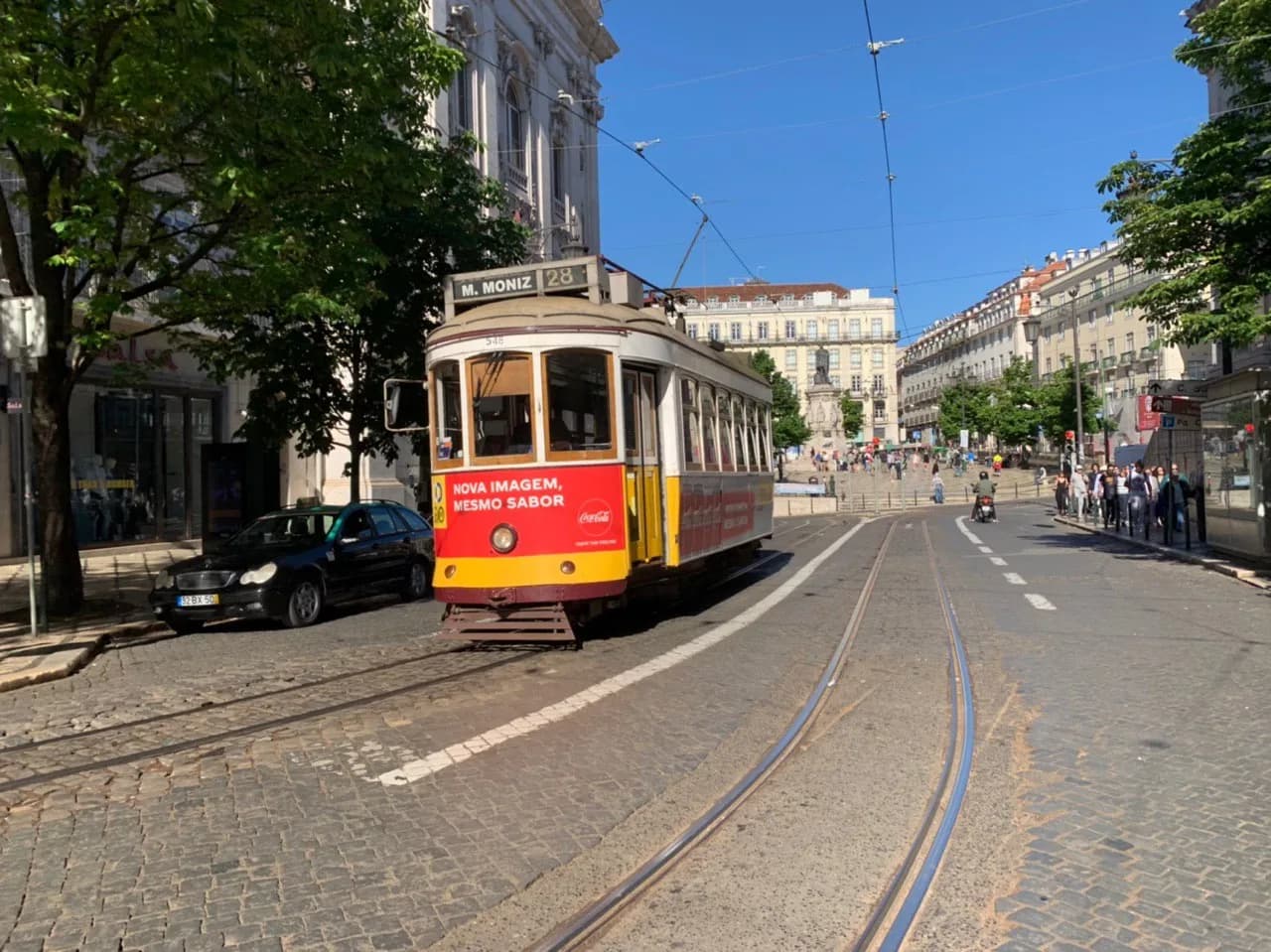
Last updated September 2026, with sources checked on 12 September, this guide compares day trips from Lisbon by train with four practical bus alternatives. Sintra and Cascais use CP urban trains, Setúbal has direct Fertagus trains, and Évora and Tomar use other CP services. For Fátima, Óbidos, Sesimbra and Costa da Caparica, the bus options below are often more useful to visitors than a complicated rail connection. A town having a railway station does not mean the station is beside the sights or that the current journey is entirely by train. Allow for the journey from your accommodation to the departure station; our Lisbon public transport guide explains the city connections to plan alongside an excursion.
Featured image: Shahadusadik, CC BY-SA 4.0, via Wikimedia Commons. Resized and converted to WebP.
Day Trips From Lisbon by Train: Quick Answer
Start by choosing the destination and operator, then the Lisbon station. There is no single day-trip terminal and no one occasional ticket covering all nine routes. The times below are rough planning allowances for the main transport leg, not promises for a dated departure; station access, waiting and onward travel take additional time. Where a route or schedule is unsettled, use the linked destination guide and the operator’s current journey information before fixing a return. A shorter rail journey can still lead to a longer day if the main attraction is uphill or requires another bus.
| Destination | Practical Lisbon departure | Mode / operator | Planning basis | Important check |
|---|---|---|---|---|
| Sintra | Rossio or Oriente; intermediate boarding points available | CP urban train | Roughly 40–50 minutes from the main terminals | Allow separately for palace access |
| Cascais | Cais do Sodré | CP urban train | About 40 minutes on a stopping train | Some trains end at Oeiras; replacement buses affect selected journeys |
| Setúbal | Roma-Areeiro, Entrecampos or Sete Rios | Fertagus train | Allow around an hour; check selected departure | Not CP’s Sado line or included in the €11.40 CP combination |
| Évora | Oriente for rail; coach terminal depends on service | CP InterCity or coach | Compare the selected departures; allow a substantial travel leg | Reserved train, fare availability and station-to-centre walk |
| Tomar | Santa Apolónia or Oriente | CP Regional train | Around two hours as a rough allowance | Check through service versus an Entroncamento connection |
| Fátima | Terminal printed on the coach ticket | Coach | Around 90 minutes as a rough allowance | The railway stop named Fátima is not beside the sanctuary |
| Óbidos | Campo Grande for Rápida Verde | Rodoviária do Oeste bus | Check the current direct bus timetable | Óbidos has a railway, but current Oeste works affect rail access |
| Sesimbra | Sete Rios for route 3721 | Carris Metropolitana bus | Allow about an hour or more in traffic | Check the return and the exact stop |
| Costa da Caparica | Use the current route’s Lisbon stop | Carris Metropolitana bus | Check the chosen route and traffic conditions | Select a beach close to your actual stop |
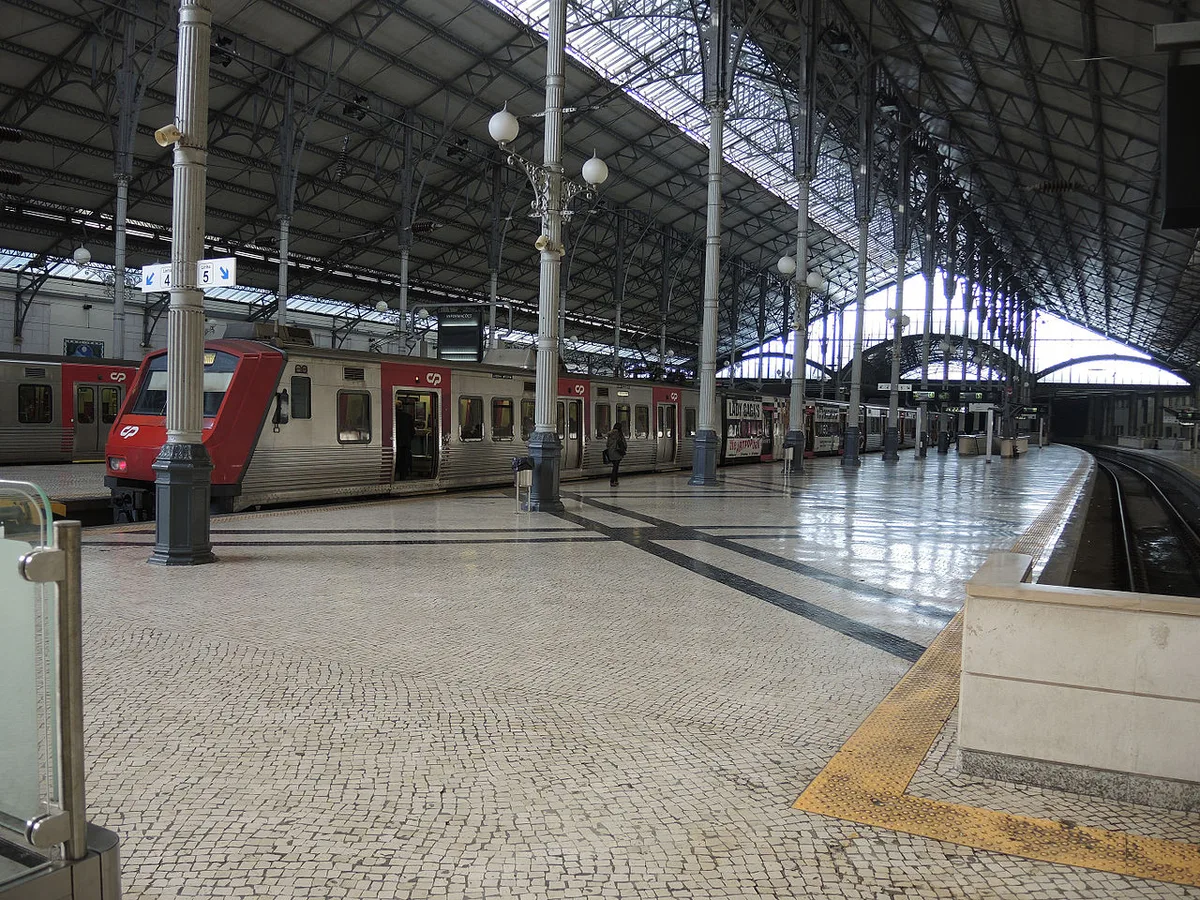
CP, Fertagus and Lisbon’s Different Departure Stations
CP’s Lisbon urban network includes the Sintra, Cascais, Azambuja and Sado lines. The first two serve the familiar tourist trips from Rossio/Oriente and Cais do Sodré. The important exception is Setúbal: direct trains across the bridge from Lisbon are run by Fertagus, a separate operator. CP’s Sado line starts at Barreiro on the south bank; from central Lisbon, that alternative requires a separate ferry crossing before the CP train. Évora’s InterCity trains and Tomar’s Regional services are also separate from the Lisbon urban fare products. Being able to connect between operators does not make their tickets interchangeable. Nor does a network accessibility description guarantee a step-free whole trip: check the specific station, train or replacement bus and your destination’s last-mile route. A station map is useful for connections, but it is not evidence of an exact fare or current departure.
| Service | Useful departure | Day trip / distinction |
|---|---|---|
| CP Sintra line | Rossio / Oriente | Sintra; no reserved seat |
| CP Cascais line | Cais do Sodré | Cascais; check stopping and replacement-service pattern |
| Fertagus | Roma-Areeiro / Entrecampos / Sete Rios | Direct Setúbal route across the bridge |
| CP Sado line | Barreiro, after a separately paid ferry from Lisbon | Alternative route to Setúbal, not the direct Fertagus service |
| CP InterCity | Oriente on the chosen service | Évora; book the specific train |
| CP Regional | Santa Apolónia / Oriente | Tomar; check direct train and connection details |
9 Day Trips: Five Rail Options and Four Bus Alternatives
Use the destination list to match the day you want with the transport actually available. Sintra’s palaces, a Cascais coast walk and Tomar’s hilltop convent are different time commitments even before you compare fares. Treat the bus alternatives as recommendations for practical access, not claims that a railway has never existed.
- Sintra (train)
- Direct CP services run from Rossio and Oriente to Sintra; allow roughly 40–50 minutes aboard as an initial planning estimate.
- Choose one priority palace and build the day around its admission and onward transport. Pena, the Moorish Castle and Quinta da Regaleira are not a guaranteed easy three-stop circuit.
- See the Lisbon to Sintra train guide for current timetables and ticket options.
- Cascais (train)
- CP stopping trains from Cais do Sodré normally take about 40 minutes. Read the destination and replacement-bus notes, especially late in the day.
- Cascais works as a half-day trip, covering the old town, the marina, and beaches within easy walking distance of the station.
- Fares and timing sit in the Lisbon to Cascais train guide.
- Setúbal (train)
- Fertagus runs the direct Lisbon–Setúbal service from Roma-Areeiro via Entrecampos and Sete Rios. It is not a CP Sado-line train.
- Focus a car-free first visit on the old town, Mercado do Livramento and the waterfront. Arrábida’s beaches need separate onward-transport planning.
- Platform and timetable notes are in the Lisbon to Setúbal train guide.
- Évora (train or bus)
- Compare a specific CP InterCity departure from Oriente with a specific coach service. Their terminals, durations, fares and return options are not automatically the same.
- Roman ruins and a compact historic core reward the extra travel time compared with the closer coastal stops on this list.
- Compare the transport choices in the Lisbon to Évora guide, then price the dated service with the operator.
- Tomar (train)
- CP’s Tomar timetable lists services from Santa Apolónia via Oriente. Allow around two hours as a rough starting point and check whether your chosen journey is direct.
- The Convent of Christ is the main hilltop sight. Allow for the walk from the railway station through town and up to the monument rather than treating the train arrival as sightseeing time.
- Departure station and routing notes sit in the Lisbon to Tomar train guide.
- Fátima (practical coach option)
- A coach is a practical way to reach Fátima near the sanctuary. Do not confuse the railway stop bearing the Fátima name with arrival in the sanctuary area.
- Allow time according to your purpose: a brief look around, a service or a pilgrimage visit are different itineraries. Confirm the event schedule if attending worship matters to your day.
- Departure points and schedule notes are in the Lisbon to Fátima bus guide.
- Óbidos (practical bus option)
- Rodoviária do Oeste’s Rápida Verde timetable connects Campo Grande with Óbidos. Compare that direct bus with the disruption affecting the Oeste railway, not an undated all-rail itinerary.
- The old town and Rua Direita suit a compact visit. Walking the exposed walls is optional, not essential, and may not suit heights, young children or limited mobility.
- The Lisbon to Óbidos bus guide confirms the current Campo Grande departure and schedule.
- Sesimbra (bus)
- Carris Metropolitana lists route 3721 between Sete Rios and Sesimbra. Confirm the date-specific departures and leave room for road traffic.
- Make the seafront and town your core plan. The castle is uphill and remote coves require a separate access plan; neither is an effortless extension of a beach-front stroll.
- Current bus numbers and stops are listed in the Lisbon to Sesimbra bus guide.
- Costa da Caparica (bus)
- Choose the current bus route for your Lisbon starting point and the beach area you intend to visit. Route stops and a dated return matter more than a blanket one-hour estimate.
- The beach coast extends beyond the town. Select a beach near your actual stop rather than assuming every coastal stretch is a short walk from one terminal.
- Current bus numbers and summer queue timing are in the Lisbon to Costa da Caparica bus guide.
Choosing by Time, Cost, and Crowd Tolerance
For a short, flexible day, Cascais is a straightforward comparison point because the railway terminus is close to the town and waterfront. Sintra’s train journey is similarly manageable, but the palace connection can be the main constraint. Setúbal works without a ferry on Fertagus; add a ferry only if you deliberately choose the CP route via Barreiro. Évora and Tomar are longer days where return-service choice matters more. For buses, compare both directions before leaving Lisbon and keep a margin for traffic. For any timed attraction, work backward from the entry time through the local connection and the outward departure rather than selecting the train first and hoping the rest fits.
| Priority | Useful choice | Planning trade-off |
|---|---|---|
| Shorter rail leg | Cascais or Sintra | Cascais has simpler town access; Sintra’s hilltop sights add another leg |
| One train across the Tagus | Setúbal on Fertagus | Separate operator and fare from CP |
| Longer heritage day | Évora or Tomar | Choose the return before filling the sightseeing day |
| Direct practical bus access | Fátima or Óbidos | Do not mistake a distant or disrupted railway for arrival at the sights |
- Crowd timing at Sintra
- An early arrival can leave more flexibility but does not guarantee a short palace queue.
- Check the timed-entry and park-access requirements before buying admission.
- One destination versus a multi-stop tour
- A guided Fátima-and-Óbidos circuit is a different product from independent travel on separate scheduled buses.
- For a first public-transport visit, plan one main destination and add another only after verifying the connecting and return services.
Tickets, Cards, and Booking Logistics
Ticket names are less useful than their operator coverage. CP’s 2026 Lisbon fare table lists Lisbon–Sintra and Lisbon–Cascais adult returns at €5.10 each, CP Zapping at €2.05 per qualifying journey, a €6.70 CP tourist 24-hour ticket and the €11.40 Carris/Metro/CP 24-hour combination. Add €0.50 if you need an occasional Navegante card. Two CP Zapping deductions use €4.10 credit, so an €11.40 combination is not automatically good value for a simple train return. Compare the actual covered journeys, including any Lisbon Metro connection. The combination includes CP urban lines but not Fertagus, the Barreiro ferry, Évora’s InterCity service, Tomar’s Regional journey or the separate regional buses in this guide. The Sado-line wording therefore does not make a direct Fertagus trip to Setúbal eligible. Under CP’s ticket rules, a reusable occasional card holds one product type at a time. Zapping can be used with compatible operators at their own fares; a new operator does not necessarily require a new card. CP urban ticket offices and machines sell the relevant products and accept Zapping top-ups in fixed amounts. Reserved InterCity and coach tickets should be bought for the selected service; an urban card is not a substitute. Check child and other concession eligibility for the specific product instead of assuming one half-price rule applies to every operator.
- Before paying
- Match each leg to its operator and check whether a pass covers it.
- Separate card cost, credit loaded and fares actually deducted.
- Confirm any timed attraction or reserved return before committing to a tight itinerary.
- Temporary arrangements to check
- CP marks the Sintra Train & Bus bundle temporarily suspended; do not assume a price in an older leaflet establishes availability.
- CP’s Oeste notice describes replacement buses between Mira Sintra-Meleças and Caldas da Rainha. Its stated restrictions include no wheelchair, bicycle or scooter carriage on those replacement buses.
- The Cascais timetable also marks replacement-bus periods. Check current notices and dated footnotes before relying on an all-train early or late journey.
Frequently Asked Questions
Is Sintra a day trip from Lisbon by train?
Yes. Direct CP urban trains from Rossio and Oriente make Sintra a practical day trip. Allow roughly 40–50 minutes aboard as an initial estimate and additional time for the palace or town connection.
Can you get to Fátima from Lisbon by train?
A railway stop named Fátima is not arrival beside the sanctuary. For most sanctuary visits, compare direct coach services into Fátima instead of booking a train on the strength of the station name.
What is the fastest train day trip from Lisbon?
Among these choices, Cascais and Sintra have short, frequent urban rail journeys. A normal Cascais stopping train takes about 40 minutes; some weekday peak services are faster. The best choice depends on your starting station and the onward walk or bus, not just train minutes.
Is Évora a day trip from Lisbon by train or bus?
Both are possible, but compare actual departures and terminals. CP InterCity trains and coaches have different schedules and fares; do not assume both take exactly 90 minutes or leave from the same place.
Which Lisbon day trips require a bus instead of a train?
This guide recommends bus options for Fátima, Óbidos, Sesimbra and Costa da Caparica. That does not mean all four lack a railway: Óbidos has a station, and current Oeste disruption makes the practical journey an important distinction.
What does public transport to these day trips cost?
For Sintra or Cascais, CP’s 2026 fares include a €5.10 normal adult return or €2.05 per qualifying Zapping journey, plus a new card if needed. The €11.40 Carris/Metro/CP 24-hour ticket excludes direct Fertagus trains to Setúbal, the Barreiro ferry, Regional/InterCity journeys and the separate bus operators. Price those legs individually.
Plan more car-free journeys from Lisbon
Continue with the route and ticket guides that fit your trip.