Europe Nook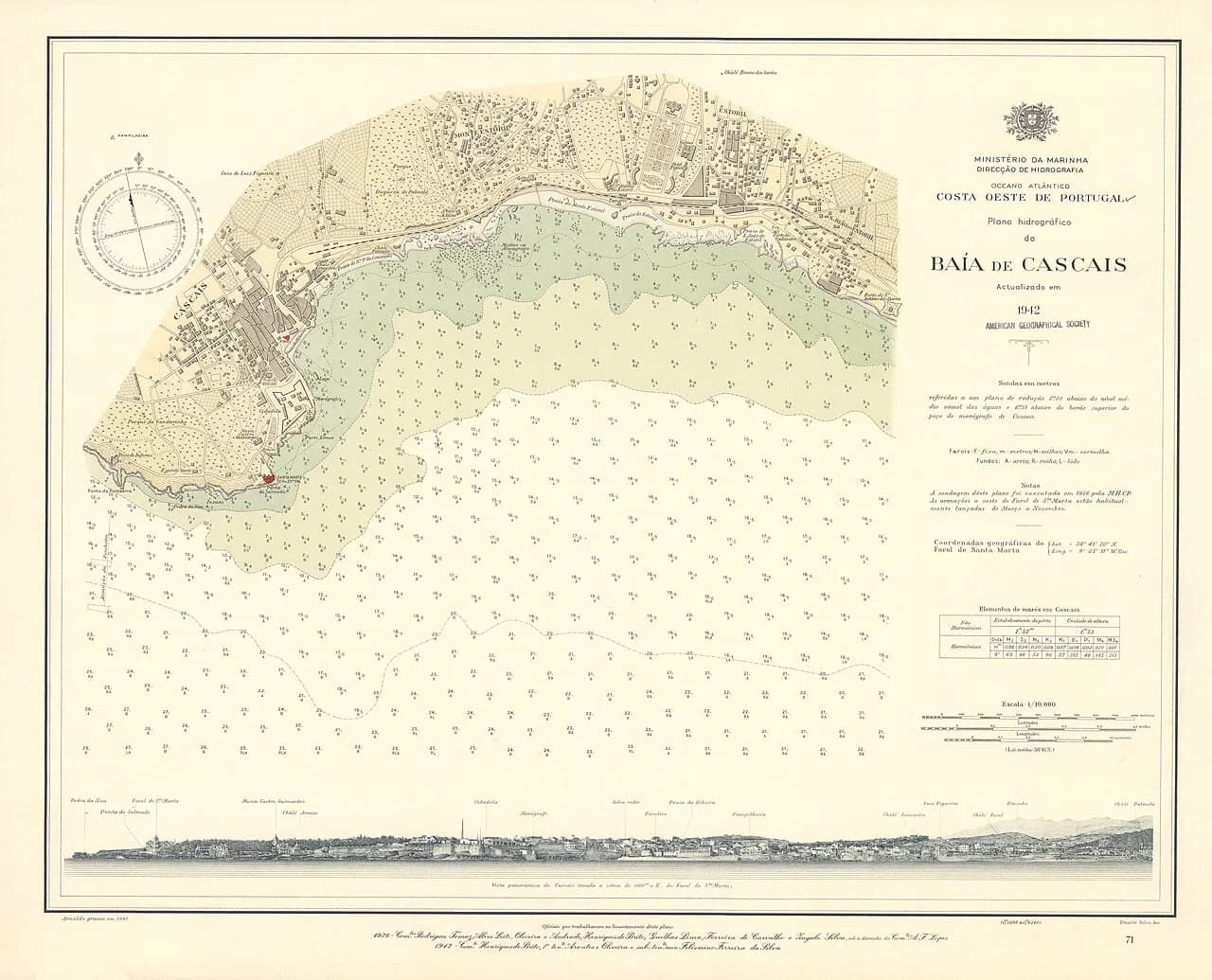
Last updated September 2026, with sources checked on 12 September, this Lisbon to Cascais train guide covers the departure station, current fares and the coastal journey. CP’s Cascais line links Cais do Sodré with Cascais, but some services terminate at Oeiras and the published timetable marks replacement buses for certain journeys. Check the whole journey, especially for an early or late return, rather than assuming every departure is a through train.
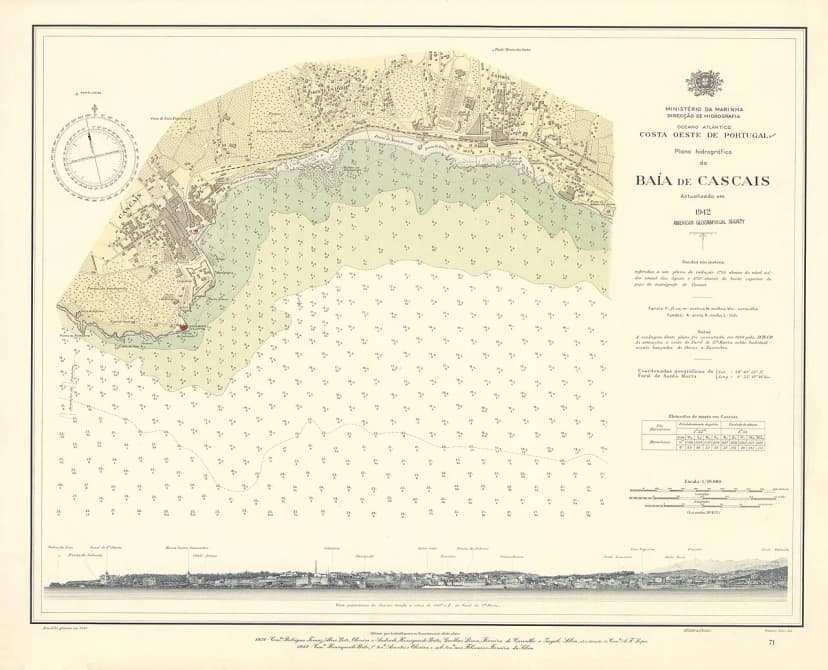
Featured image: Direcção de Hidrografia e Navegação, CC BY-SA 4.0, via Wikimedia Commons. Resized and converted to WebP.
Quick Answer: Lisbon to Cascais Train Basics
The Lisbon to Cascais train leaves from Cais do Sodré, beside the green-line Metro terminus. A normal daytime stopping service takes about 40 minutes; some weekday peak through services take about 33 minutes. CP’s published Cascais timetable shows the difference, including other trains that finish at Oeiras. Read the destination display before boarding. The ordinary adult four-zone single is €2.55, while CP Zapping deducts €2.05 for a qualifying journey. Add €0.50 for a new reusable card. Seats are not reserved, and card loading is not a booking for a particular departure. Cascais station is in the town centre near the waterfront, which makes a simple coast-and-old-town day practical without another vehicle. The Lisbon day-trip comparison helps if you are still choosing between Cascais and another destination.

Which Station to Use: Cais do Sodré to Cascais
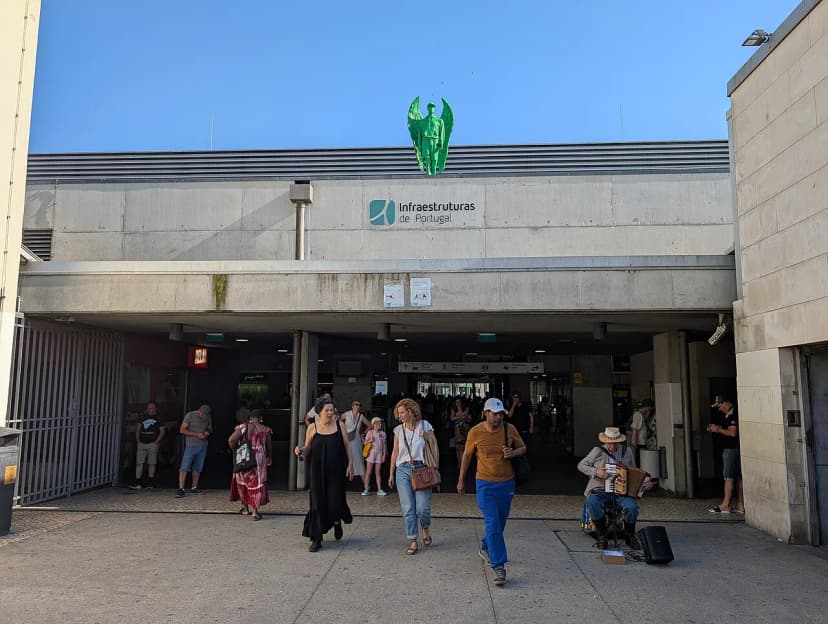
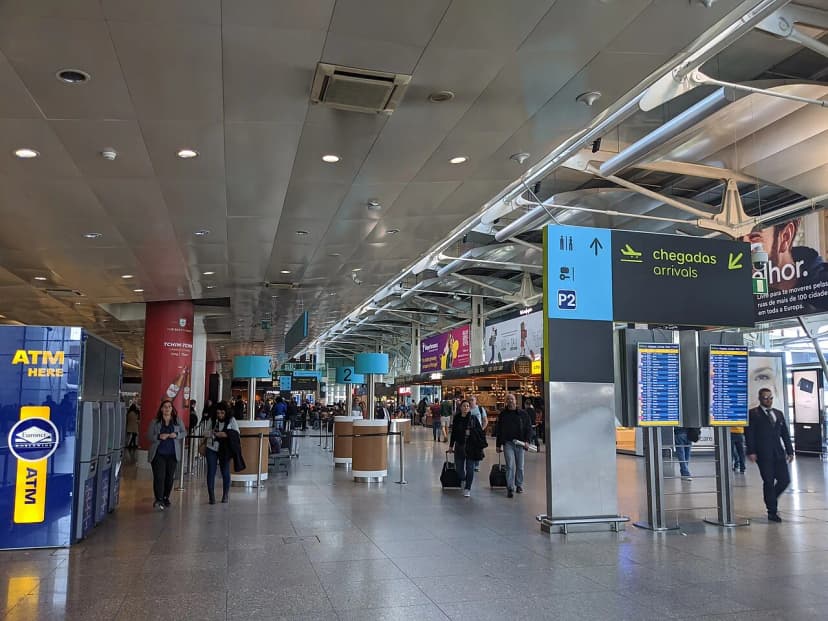
Cais do Sodré is the Lisbon terminus of the Cascais line, with CP platforms separate from the Metro platforms and nearby ferries. Follow the CP or Cascais signs after leaving the Metro. This is not a through rail connection to the Sintra line; travelling between CP’s separate Lisbon terminals may require a Metro ride or walk and the right ticket for that transfer. From Lisbon Airport, take the red Metro line to Alameda and change to the green line toward Cais do Sodré. Allow time for both the interchange and the walk into the railway station. A taxi or app ride to the station is another option if the quoted cost and luggage needs justify it. At the coast, choose Cascais station for the town centre; Estoril is a different stop, even though both appear on the same line. Keep your card accessible until you have exited the destination station. Before buying a city pass for this journey, compare the coverage and payment options in our Lisboa Card and Navegante occasional-card guide.
Tickets and Fares: Navegante Card, Viva Viagem and Zapping
CP’s 2026 fare table lists an adult Lisbon–Cascais return at €5.10 and the normal four-zone single at €2.55. The occasional Navegante card costs €0.50 and can be reused; each passenger needs a separate card. Zapping is stored credit, with CP deducting €2.05 per qualifying urban journey. Two ordinary outward and return deductions therefore use €4.10 of credit, but a fresh €5 top-up leaves €0.90 unused, so the amount initially paid is not identical to the fare consumed. CP’s Lisbon urban ticket rules permits Zapping loading at CP urban ticket offices and machines in fixed amounts from €3 to €40; Metro sales points are another place to prepare the card. The occasional card holds one ticket-product type at a time. Existing Zapping can be used with participating operators at their own rates; it need not be emptied merely to change operators. Validate before each train journey and retain the receipt. Avoid loading a new product during an active journey because this can interfere with the current validation. There is no seat reservation, but you can load a suitable fare in advance. Compare a day ticket against the journeys you actually intend to make, not the number of attractions on your list.
- Normal adult single / return: €2.55 / €5.10 for Lisbon–Cascais, plus €0.50 if a new card is needed.
- CP Zapping: €2.05 per qualifying journey, not Metro’s €1.72 fare.
- CP tourist ticket: €6.70 for 24 hours of covered CP Lisbon urban travel.
- Carris/Metro/CP ticket: €11.40 for 24 hours after first validation on covered transport; not a general pass for every regional bus or operator.
Schedule and Frequency: Peak, Off-Peak and Last Trains
CP’s published Cascais timetable, downloaded on 12 September 2026, carries a May 2025 validity date and separate weekday and weekend/public-holiday tables. During much of the daytime, stopping trains leave Cais do Sodré every 20 minutes and reach Cascais 40 minutes later. Weekday peak periods include semi-fast through trains interleaved with services terminating at Oeiras; counting all departures would overstate the frequency of direct Cascais trains. The PDF lists first departures at 05:30 and final departures at 01:30 from each end, but the last service is not an all-train journey. Yellow bus symbols mark replacement transport between Oeiras and Cascais: for example, the weekday return table shows the 22:00 Cascais departure starting by bus and connecting at Oeiras. Weekend tables contain additional bus symbols and dated footnotes, including some conditions limited to 2025. Do not treat those expired footnotes as a fresh 2026 promise. Check current CP disruption notices and the station information for your exact date, boarding stop and transfer. Leave a margin before the final service, especially if you need the Metro after arriving back in Lisbon.
Journey Duration and the Scenic Route
A normal through stopping train takes about 40 minutes. The 33-minute examples belong to weekday semi-fast services, not to a general faster-off-peak rule. Westbound, the line passes Belém, then Paço de Arcos before Oeiras, and continues along the Estoril coast to Cascais. Some faster trains do not stop at Belém, so a visible landmark or station on the route map does not mean your train calls there. For water views, the left-hand side facing the direction of travel is generally the coastal side from Lisbon toward Cascais; reverse that on the return. A crowded carriage may leave no choice of seat, and the urban sections do not offer uninterrupted sea views. Enjoy the scenery when possible without making a window seat essential to the day.
Avoiding Crowds: Best Times and Seat Strategy
Prepare your card before a busy beach day if convenient, either at a CP sales point or another compatible Zapping sales point. That removes the ticket-purchase task at Cais do Sodré but does not reserve a place aboard. Starting at a terminus can give you a better opportunity to find a seat than joining halfway along the route, although a seat is never guaranteed. Commuting periods and popular summer beach days can both be busy. Do not assume waiting until sunset guarantees a calmer return: other beach visitors may make the same decision, and later journeys can require a replacement bus. Pick a return that leaves room for a missed departure and your onward journey in Lisbon. If you have a stroller, large bags or mobility requirements, check assistance and replacement-bus arrangements rather than assuming a normal train journey describes the whole route.
- Load a suitable fare or credit before reaching a busy ticket queue when practical.
- Read the final destination: Oeiras is not Cascais.
- Choose a return with a spare departure available afterward.
- Do not rely on a guaranteed seat or a quiet sunset service.
Alternatives Compared: Train vs Rideshare vs Bus or Drive
The train is a low-cost, direct public-transport option for travelling between central Lisbon and Cascais town centre. Taxi and ride-hailing alternatives may be useful for a group, a hotel away from the stations or substantial luggage, but compare the current vehicle quote with the total train fares for your group. App prices vary with demand and neither a fixed price nor a fixed road journey time is established here. A bus can make sense from a particular starting point, but compare an actual route instead of assuming one generic Lisbon bus terminal. Driving gives flexibility for stops away from the railway, with traffic and parking to plan separately. None of these alternatives removes the need to check the address of the beach or attraction you actually want to reach. For a broader comparison of Lisbon's other rail-accessible day trips, the train to Sintra is one option worth checking. The train to Setúbal is another rail-based alternative to compare. If a beach day without a fixed rail line suits your plans better, the bus to Sesimbra is one option. The bus to Costa da Caparica is another, closer alternative.
| Mode | Time basis | Cost basis | Main trade-off |
|---|---|---|---|
| CP train | About 40 minutes on a normal daytime stopping service | €2.55 normal adult single or €2.05 CP Zapping, plus new card if needed | Central stations; crowded trains and replacement-bus periods possible |
| Taxi or app ride | Depends on traffic and exact addresses | Get a current vehicle quote or applicable taxi tariff | Door-to-door convenience versus higher total cost |
| Bus | Check a specific origin, route and destination | Check the operator’s current ticket | May suit a starting point away from Cais do Sodré |
| Drive | Depends on traffic and parking search | Fuel, any tolls and parking | Flexible stops but parking needs a plan |
Combining With Other Stops: Belém and Beyond
Belém is a possible stop on the Cascais line, but select a train that actually calls there. CP’s timetable shows Belém among the stopping-service stations, while some weekday semi-fast trains skip it. A stopover is not automatically free on a point-to-point ticket, and Zapping has a limited transfer window; for a long visit, budget for another journey or compare a suitable day ticket. The ordinary occasional fares, not a restricted monthly senior product, are the relevant comparison for most visitors. Give Belém and Cascais distinct time budgets: transport between them does not include the walks, attraction entry or queues at either destination. If you have only half a day, choosing one main area leaves more flexibility than trying to turn a rail connection into a full visit to both.
Common Mistakes to Avoid
Most avoidable problems come from reading only the departure time, not the full service. Check the destination, stopping pattern and any replacement-bus symbol together. Prepare the fare you need, allow time to find the platform, and keep the last useful return separate from the last departure printed in the timetable.
- Do not board an Oeiras-terminating train expecting a through ride to Cascais.
- Do not assume a semi-fast train will stop at Belém.
- Do not confuse money loaded as Zapping with the exact cost deducted for your two rides.
- Do not describe the 01:30 departure as a guaranteed all-train return.
- Do not carry a dated 2025 weekend footnote into a 2026 plan without checking current notices.
For the arrival walk, Visit Lisboa’s Cascais rail guide places the station in the town centre, within walking distance of local sights. Choose your waterfront stops before setting the return time.
Frequently Asked Questions
How long does the train from Lisbon to Cascais take?
A normal daytime stopping train takes about 40 minutes. Some weekday peak semi-fast through trains take around 33 minutes. The stopping pattern and any replacement-bus connection determine your actual journey.
How much does a Lisbon to Cascais train ticket cost?
The 2026 normal adult Lisbon–Cascais single is €2.55 and return €5.10. CP Zapping deducts €2.05 per qualifying journey. Add €0.50 for a new reusable card, and remember that fixed Zapping top-ups may leave unused credit.
How often do trains run from Lisbon to Cascais?
Much of the published daytime stopping schedule runs every 20 minutes. Weekday peaks also have semi-fast trains and Oeiras-only services, so check departures that actually reach Cascais rather than counting every train on the board.
What time is the last train from Cascais to Lisbon?
The CP PDF checked in September 2026 lists a final 01:30 departure from Cascais, but marks it as a replacement bus to Oeiras followed by a train. It is not a 01:30 through train. Check CP’s published Cascais timetable and current service notices for your date, and allow for onward transport after reaching Lisbon.
Which station do you need in Lisbon for the Cascais train?
Cais do Sodré is the Lisbon starting terminus and connects with the green Metro line. You can also board at intermediate stations where the chosen service stops, such as Belém on stopping trains.
Is the train better than a taxi or rideshare to Cascais?
The train is a practical low-cost choice for a town-centre visit. A taxi or app ride may suit a group, luggage or accommodation far from a station; compare the live vehicle quote with the total train fares and connection time.
What other car-free day trips are possible from Lisbon?
Lisbon has several rail- and bus-based day trips beyond Cascais. The train to Évora is one option for travelers who want to go further afield. The train to Tomar is another rail-based choice. For a practical bus alternative, the bus to Óbidos is worth considering. The bus to Fátima takes you closer to the sanctuary than the distant Fátima-named railway stop. Each of these guides covers its own station, schedule and ticketing details, so check the specific page before you plan around it.