 Europe Nook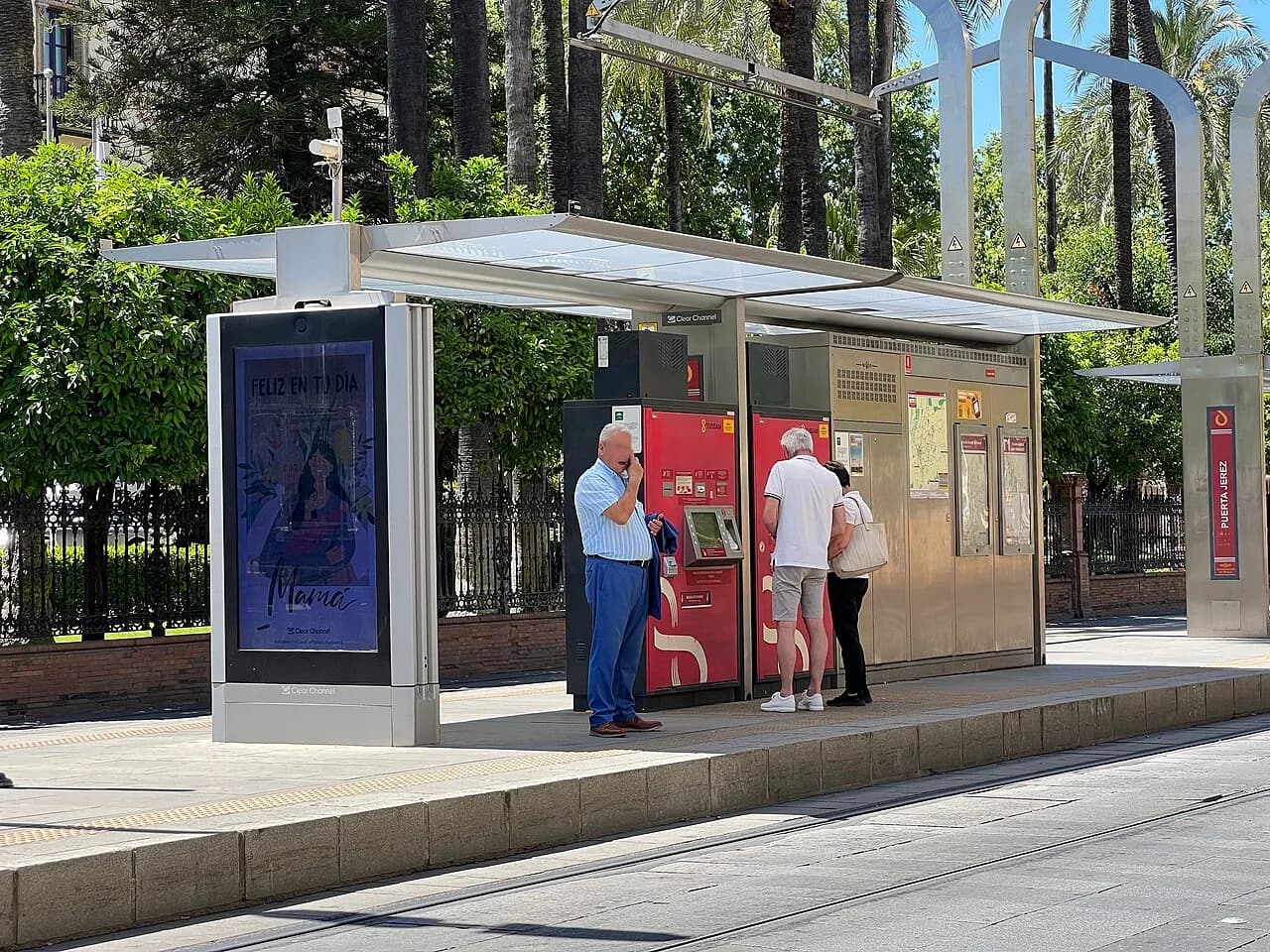
Last updated September 2026. The Seville tram, MetroCentro T1, is useful for journeys along the cathedral–Prado–San Bernardo–Nervión corridor. Do not rely on an old map showing Plaza Nueva as the boarding terminus: works have cut back the city-centre end to Archivo de Indias. Choose it for a route that fits your plans, not as a citywide sightseeing loop or an airport railway.
Historical 2023 view of the Puerta Jerez tram stop and ticket machine; not proof of today’s payment methods or service. Photo: Chabe01, CC BY-SA 4.0, via Wikimedia Commons. Resized and converted to WebP.
What Is the Seville Tram (MetroCentro)?
T1 is the surface tram operated by TUSSAM. It uses TUSSAM tickets, while Metro Line 1 is a separate system with its own fares. Both can be useful near the centre; the distinction is not simply tram for tourists and Metro for suburbs. The Seville public transport overview compares all the main choices.
The municipal works notice records the closure of the Plaza Nueva stop and the temporary Archivo de Indias terminus. Diario de Sevilla's 24 August 2026 on-site report confirms the restriction was still in place then. No reopening is assumed from an earlier estimated construction duration.
T1 does not reach the airport or Santa Justa. San Bernardo is a rail interchange on the tram corridor, however, so “the tram serves no train station” is misleading. For arriving flights, use the airport transfer guide; for mainline departures, check the Santa Justa guide.
Map: Archivo de Indias tram-stop area for orientation. Check the current platform signs and works notices; the map is not a live service diagram.
Route and Stations: What's Near Each Stop
The seven-stop sequence below follows the dated Busillo T1 route display, with the city-centre end at Archivo de Indias. Busillo is independent of TUSSAM and derives its display from the operator's open timetable data. Check live notices before boarding. The landmark notes are orientation, not claims that attraction entrances are directly on the platform.
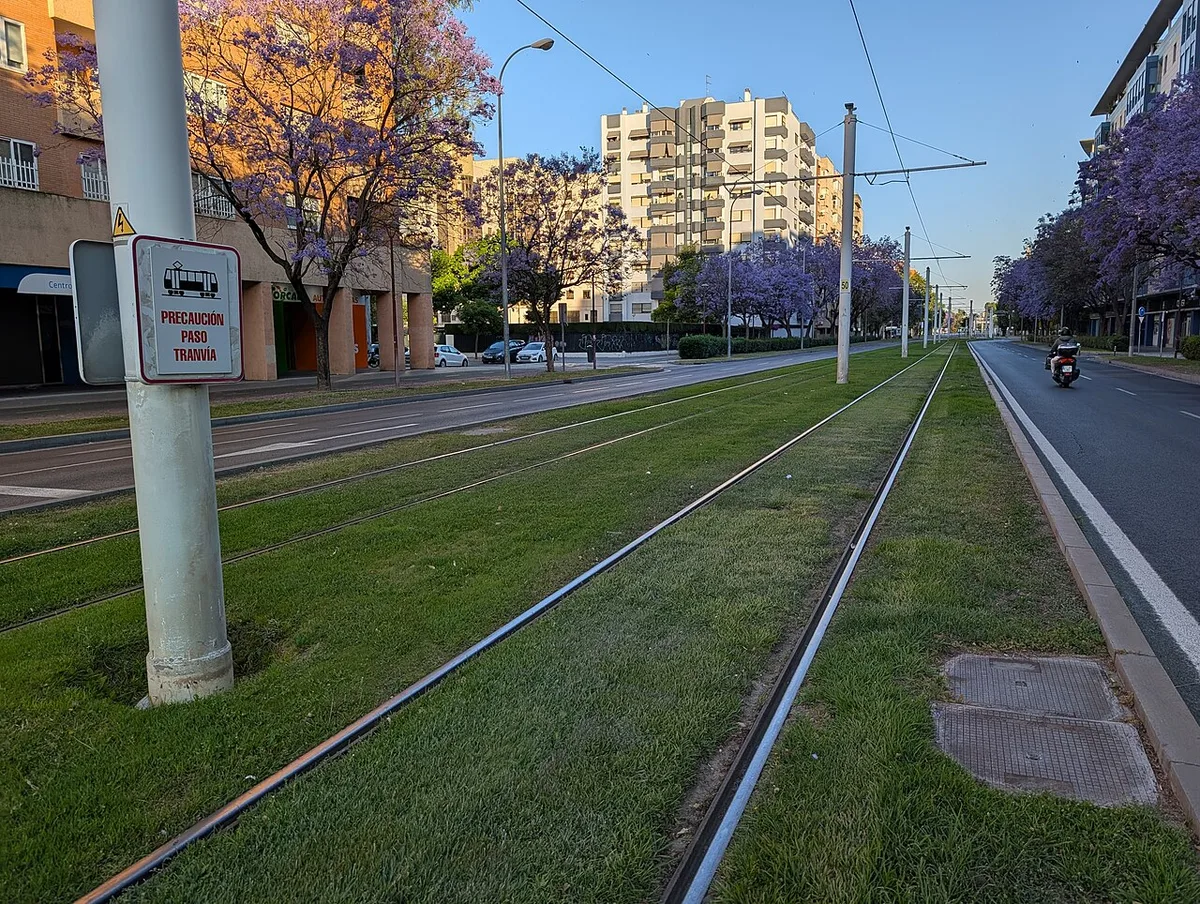
For the reverse journey, look for the Archivo de Indias direction. The existence of tracks or a shelter does not prove a stop is currently served. At crossings, use the marked pedestrian route rather than walking along the grassed track reservation.
| Stop, centre toward Nervión | Useful nearby area or connection | Check before choosing it |
|---|---|---|
| Archivo de Indias | Cathedral, Alcázar surroundings and Archivo de Indias | Temporary central terminus; Plaza Nueva is farther along the closed section |
| Puerta Jerez | Metro Line 1; Torre del Oro and university area | Metro entrance is separate from the tram platform |
| Prado San Sebastián | Metro Line 1, coach terminal and park area | Coach bays, city-bus shelters and tram stop are different boarding points |
| San Bernardo | Metro Line 1 and Cercanías station | Allow time to leave the tram and enter the relevant rail station |
| San Francisco Javier | Office and residential corridor | Match the stop to the street address, not just the Nervión district name |
| Eduardo Dato | Nervión shopping and stadium area | Check the actual venue entrance and post-event service notices |
| Luis de Morales | Outer end of this tram route in Nervión | Not Santa Justa station |
Tickets and Fares for the Seville Tram
The current TUSSAM fare table lists the ordinary single at €1.40. TUSSAM's buying instructions direct tram passengers to stop ticket machines for that single; keep the ticket for inspection. With a TUSSAM travel card, validate when boarding and check the reader's confirmation.
Do not confuse paying by bank card with using a contactless TUSSAM travel card. The operator's public bank-card FAQ specifically describes buying a single when boarding a bus; it does not establish that the same onboard method is available on T1. This guide therefore does not promise tram bank-card tapping. Use the stop machine or an eligible travel card and follow the posted payment instructions.
The dedicated one-day and three-day pages specify the €2 tourist-card deposit. Older guidance still says €1.50, so confirm the receipt and refund terms. These passes exclude the EA and special services, and they are not Metro Line 1 tickets.
Tourist-card conditions define calendar days from first use, not rolling 24 or 72 hours. A late-evening first ride uses the first calendar day. Multiviaje has a €7 minimum reload and unused credit is not refunded under the card conditions: a low per-ride fare can leave money stranded after a short visit.
Count rides before buying unlimited travel. Four singles total €5.60, but ten no-transfer Multiviaje journeys total €4.10, excluding card costs. The transport card comparison explains those trade-offs. For a separate underground journey, use the Metro ticket guide, not the tram fare table.
| Ticket | Published price | When it may fit |
|---|---|---|
| Ordinary single | €1.40 | One or two separate tram rides |
| Multiviaje without transfer | €0.41 per journey | Repeated journeys; stored value and card costs apply |
| Multiviaje with transfer | €0.46 per journey | A different TUSSAM line within the one-hour transfer allowance |
| Tourist one / three days | €5 / €10, plus €2 deposit on dedicated product pages | Frequent ordinary TUSSAM bus/tram use; individual and calendar-day validity |
Seville Tram Operating Hours and Frequency
These terminal departures are from Busillo's T1 timetable, updated 22 August 2026 with calendars ending 4 October 2026. This is a dated secondary display, not live arrivals. “Next day” refers to departures after midnight belonging to that service day. Confirm exceptions with TUSSAM.
Do not apply a terminal departure to every intermediate stop. For a late connection, check the platform display for your direction and leave a margin rather than aiming for the final listed departure. A timetable can change for works, public holidays or event crowds.
The schedule has different gaps through the day; there is no dependable eight-minute promise at all times. Compare the next displayed arrival with the walk for your particular trip. If you need a taxi after an event, allow for a queue and road access restrictions too.
| Service day | Archivo de Indias: first–last | Luis de Morales: first–last |
|---|---|---|
| Monday–Thursday | 05:51–23:30 | 06:00–23:49 |
| Friday | 05:51–01:34 next day | 06:00–01:53 next day |
| Saturday | 05:51–01:31 next day | 06:00–01:50 next day |
| Sunday / public holiday | 06:51–23:34 | 07:00–23:53 |
Is the Seville Tram Worth Using? Compare the Actual Journey
The useful comparison is the full journey: walk to the stop, wait, ride, and walk from the destination stop. Walking between two nearby sights can be simpler, while a longer trip toward Nervión may justify the fare or spare you time in the heat. Neither choice is universally faster.
- Short central journey
- If the destination is nearby and the route suits you, use the self-guided walking route as an orientation aid. The closed Plaza Nueva segment cannot be solved by waiting at a stop that is not in service.
- Longer trip or luggage
- Choose the tram when both ends align with its corridor and the platform access suits your bags or mobility needs. Check that your accommodation is near the stop rather than assuming the district name means a short final walk.
- Destination beyond the corridor
- A bus or Metro journey may give a better connection. The bus station guide distinguishes Plaza de Armas from Prado; a tram journey to Prado does not deliver you to Plaza de Armas.
- Taxi or bicycle alternative
- A taxi can reduce changes but may not reach the door in restricted streets. For cycling, the bike rental guide explains appropriate routes and docking conditions; tram tracks are not a cycle lane.
Accessibility and Practical Riding Tips
A surface stop can avoid the underground access stages of a Metro journey, but that alone does not establish that the complete route is accessible. Check the approach, crossing, platform and vehicle boarding gap for your needs. Construction can change an otherwise familiar access route.
- At the stop
- Confirm the direction and service notice before buying or validating. Keep clear of the platform edge and let arriving passengers leave before boarding. Allow extra time if you need assistance or are unfamiliar with the machine.
- On board
- Use the marked wheelchair or pushchair area as directed and keep doors and aisles clear. If the required space is occupied or you need boarding assistance, speak to staff rather than assuming every arriving tram can accommodate you.
- Following the route
- Track the next stop on the display and your saved route. Do not rely on a promised language for every announcement. Keep the ticket or validated travel card available until you leave the service.
- Changing to Metro
- Check the Metro accessibility information and station equipment status for the onward portion. A working surface tram platform does not prove that a connecting Metro lift is working.
Optional station walkthrough by Something about Metro. Title and creator checked; playback and individual claims remain unverified. It is not evidence of current routes, fares or lift availability.
Rail Connections and the Planned Santa Justa Extension
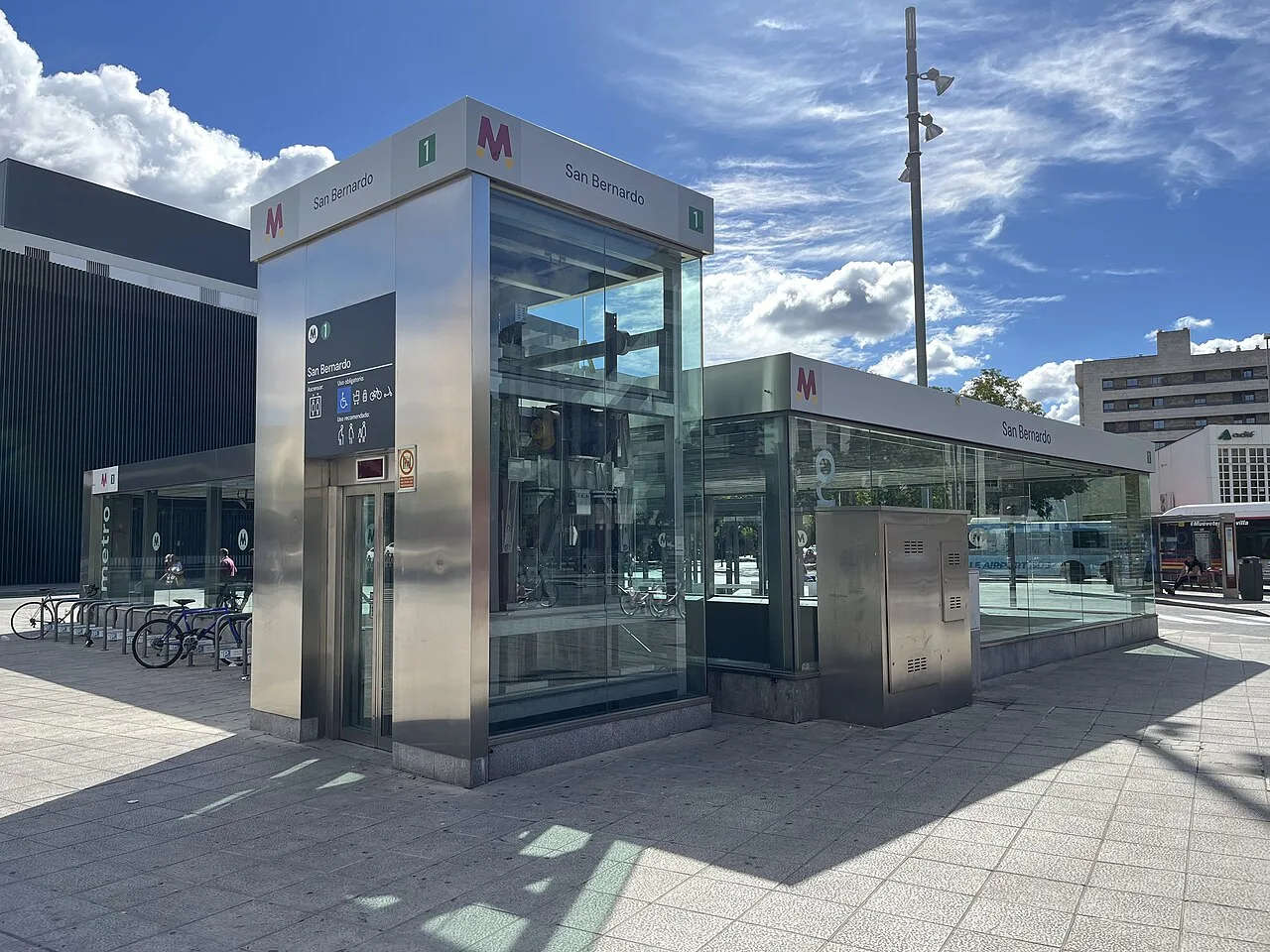
San Bernardo is the existing tram-to-rail connection to understand first. Metro Line 1 and Renfe Cercanías are separate services with their own validation and ticket conditions. Follow the signs for the train or Metro you booked, rather than entering the first doorway marked San Bernardo.
For mainline travel from Santa Justa, choose a currently operating connection and allow time inside the station. The Santa Justa station guide and day-trip comparison help separate local transfers from the longer train journey.
An extension proposal is not an operating tram service. Do not treat Santa Justa as a T1 stop until the operator announces its opening and shows it in the current route. The same caution applies to old publicity for the full Plaza Nueva route: infrastructure plans and today's boarding options are different things.
Before an unfamiliar journey, save the destination stop, its direction and an alternative. Recheck TUSSAM notices on the travel day. Optional station videos can help with general orientation but should not determine your fare, boarding point or last departure.
Frequently Asked Questions
What is the MetroCentro tram in Seville?
MetroCentro T1 is TUSSAM's surface tram along the cathedral-side corridor through Prado and San Bernardo toward Nervión. It is separate from Metro Line 1 and does not use that system's ordinary tickets.
How much does the Seville tram cost?
An ordinary single is €1.40. Eligible TUSSAM Multiviaje and tourist cards offer other pricing, with loading, deposit and validity conditions. Buy a tram single at a stop machine or use an eligible travel card; onboard bank-card payment on T1 is not confirmed here.
What are the Seville tram operating hours?
Check the dated directional table above and the current operator notices. Terminal first and last departures differ by service day and direction; Friday and Saturday service continues after midnight. Do not assume the same time applies at every stop.
Does the Seville tram go to the airport or train station?
It does not reach the airport or Santa Justa. It does serve San Bernardo, where you can change to Cercanías or Metro Line 1 under their separate ticket rules. Use the airport guide for flights and the Santa Justa guide for mainline departures.
Is the Seville tram worth it for tourists, or is walking faster?
Compare the full trip, including the walk to the stop and the next arrival. Walking may suit nearby sights; the tram can be useful for a longer trip along its corridor, with bags or in heat. There is no universal speed advantage.
How many stops does the Seville tram have?
The dated route checked for this guide has seven served stops between Archivo de Indias and Luis de Morales. Plaza Nueva is on the curtailed section; check TUSSAM for any reopening or further temporary changes rather than relying on an older eight-stop map.

_-_2023-04-25_-_4.jpg)
