 Europe Nook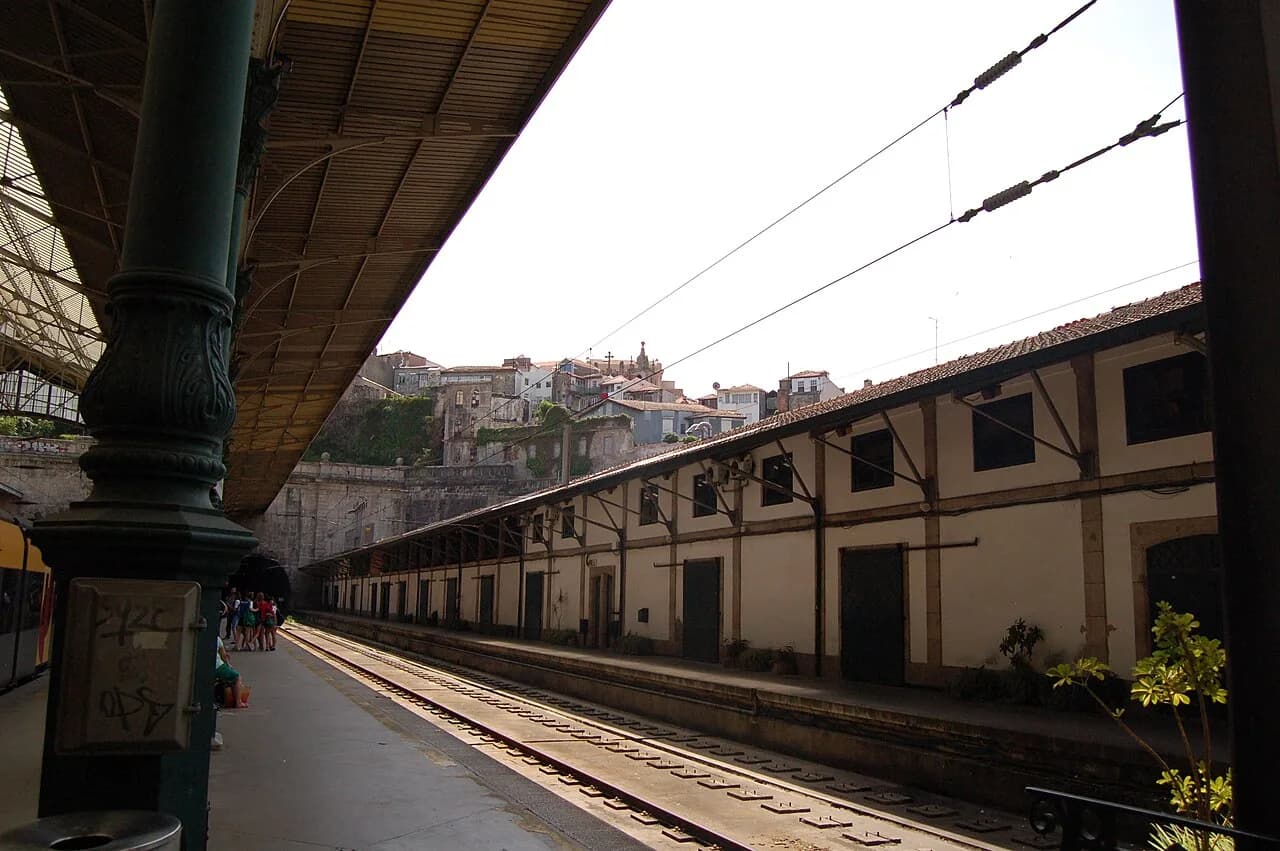
Last updated September 2026. The best day trips from Porto by train depend on how much of the day you want to spend travelling. This shortlist compares eight rail destinations and one clearly labelled bus alternative, Amarante. Choose Espinho for a short coastal outing, a historic city for a full day on foot, or one Douro town when the railway scenery is part of the attraction.
Featured image: platforms at São Bento railway station in Porto. KoS, CC BY-SA 4.0, via Wikimedia Commons. Resized and converted to WebP.
Day Trips from Porto by Train: Compare the Routes
The table uses specific published services as examples, not a universal journey-time range or a live booking result. Urban and reserved mainline trains can serve the same destination at different speeds and prices. Match the station, train category and day-of-operation note before comparing them. All times are local; add getting to the Porto station and the destination’s last mile.
| Destination | Example train or coach ride | Porto starting point | Main decision after arrival |
|---|---|---|---|
| Espinho | Urban: 34 min from São Bento / 19 min from Campanhã | São Bento or Campanhã | Use Espinho, not the separate Espinho-Vouga station |
| Braga | Urban: 1h13 / 1h08; AP example 39 min from Campanhã | São Bento or Campanhã for urban; Campanhã for AP | Old centre alone, or separate transport to Bom Jesus |
| Guimarães | Urban examples: 1h15–1h19 from São Bento | São Bento or Campanhã | Walk towards Toural; castle is farther on |
| Aveiro | Urban example: 1h12 / 57 min | São Bento or Campanhã | Canals in town; Costa Nova needs another journey |
| Régua | IR865: 09:30 → 11:20, 1h50 | Campanhã | Riverfront and museum, or a prearranged activity |
| Pinhão | IR865: 09:30 → 11:46, 2h16 | Campanhã | Village and one main activity |
| Viana do Castelo | IR831: 08:50 → 10:21, 1h31 | Campanhã | Old town/river first; Santa Luzia separately |
| Coimbra-B | AP130: 06:40 → 07:41, 1h01 | Campanhã | Connection to the centre, then the university hill |
| Amarante — bus alternative | FlixBus advertised minimum: 44 min | TIC–Campanhã for the reviewed route | Booked coach stop to São Gonçalo bridge |
- The rail figures are examples from the CP timetables linked in the route sections below. They are not door-to-door travel times.
- The coach’s advertised minimum is not a confirmed departure for your date.
- Walking and activity allowances in this guide are planning suggestions, not measured routes or accessibility certification.
The 9 Car-Free Day Trips: What Each One Offers
Pick one main destination for the day. These entries describe what you can sensibly combine after arriving and what needs separate planning. The linked route guides give the fuller fares, return options and source notes.
- 1. Espinho: a Short Coastal Outing
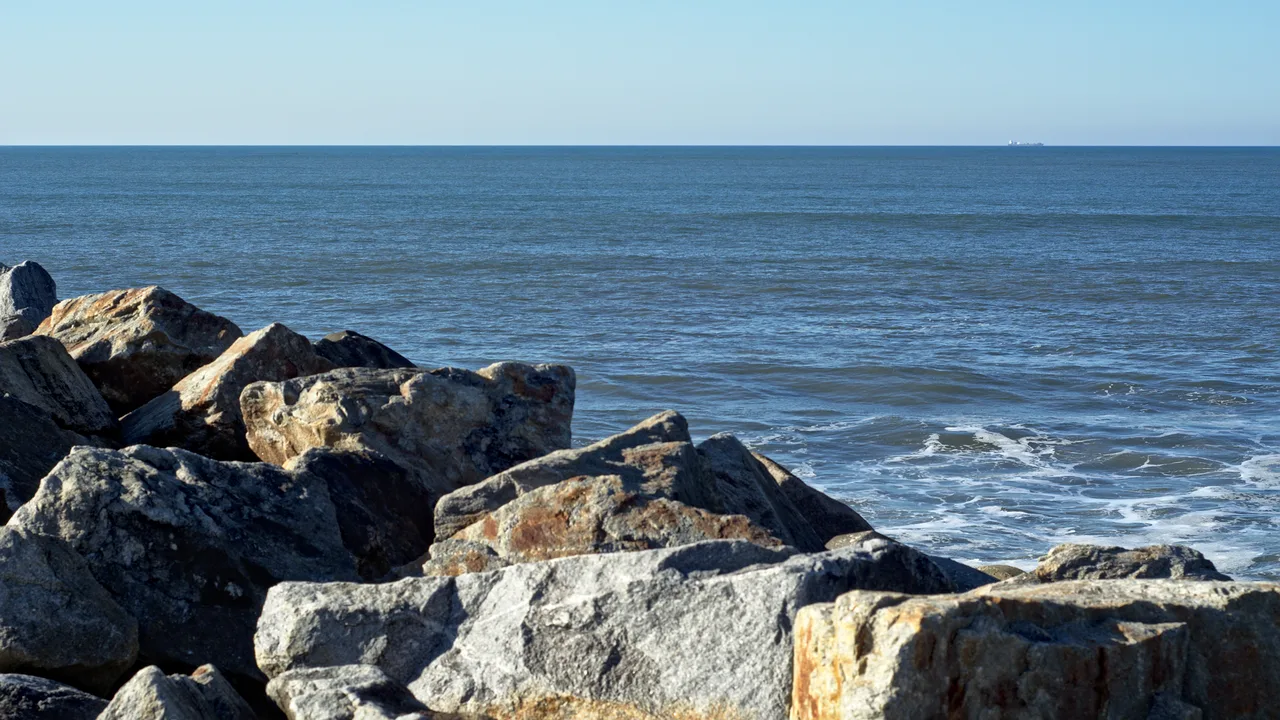
- Espinho by train is our first choice here for a simple half-day near the sea. The main station has underground platforms near the centre and seafront. Do not select Espinho-Vouga by mistake: that is the separate Vouga-line station. A beach walk and lunch can be the entire plan, without adding a tour or onward bus.
- The Aveiro-line urban timetable includes U15715, São Bento 07:55 / Campanhã 08:10 → Espinho 08:29. Another direct example takes 26 minutes from Campanhã, so the faster duration does not apply to every train.
- Choose this for a coastal stroll rather than a guaranteed swimming day. Check the weather and beach flags; arriving easily by train says nothing about sea conditions. For the weekly market, plan around its usual Monday schedule and check municipal changes. A suitable Andante product can cover the urban journey, unlike the longer trip to Aveiro.
- 2. Braga: Historic Streets with an Optional Sanctuary Trip
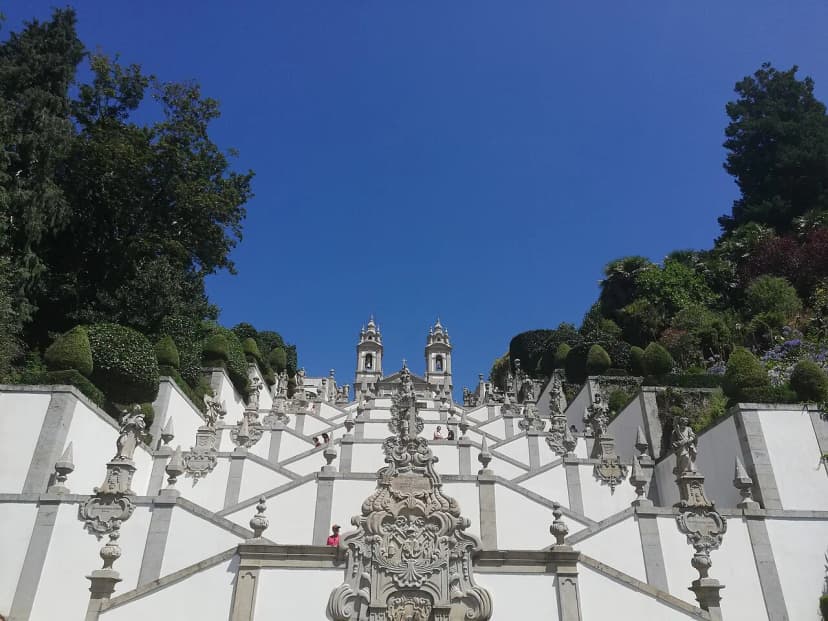
- Braga’s urban-train route works for a day split between the cathedral streets and Bom Jesus do Monte. The railway station is not at the sanctuary. You can spend the day in the centre alone, or add the separate TUB bus connection and the stairs or funicular once you have checked the return.
- The Braga urban timetable gives a useful daily example: São Bento 08:50 / Campanhã 08:55 → Braga 10:03. The reserved AP131 takes 39 minutes from Campanhã but leaves later, at 09:50. A shorter ride is not automatically an earlier arrival.
- An urban ticket is the low-cost, unreserved choice. If you want a booked seat, compare the actual AP/IC schedule and total cost. Keep the hillside visit optional when your available hours are short; a second city would add another connection and reduce time for Braga itself.
- 3. Guimarães: Old-Town Squares and the Castle Area
- Guimarães by rail suits a walking-focused historic day. From the station, head towards Largo do Toural before continuing to the old squares around Largo da Oliveira. Allow roughly 15–20 minutes for initial orientation and the walk towards the central area; the castle and Paço dos Duques require more time beyond that.
- Direct urban examples in the CP timetable take 1h15–1h19 from São Bento. The 08:20 departure reaches Guimarães at 09:39. These trains also call at Campanhã; staying aboard the correct through service does not require a change there.
- Choose the old town and castle area as the core outing. Penha is an extra hillside visit, not part of the station walk. Check its transport and visitor arrangements before adding it. Return gaps can be substantial: at weekends and on public holidays, 15:51 is followed by 17:56, so avoid arriving just after the earlier train.
- 4. Aveiro: Canals First, Costa Nova Only with Extra Time
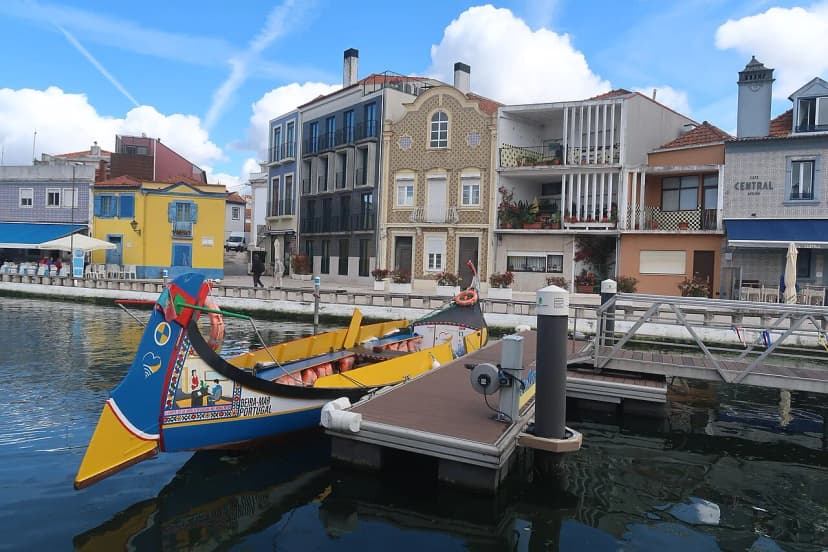
- Aveiro’s train and last-mile guide separates two different outings: the canals and architecture in town, and the coastal trip to Costa Nova. Arriving at Aveiro railway station does not put you beside the striped houses. For a straightforward first visit, keep the day centred on the canal district and lunch.
- The daily U15715 example reaches Aveiro at 09:07, taking 1h12 from São Bento or 57 minutes from Campanhã. Reserved mainline alternatives can be faster from Campanhã, but an extra transfer from your hotel and waiting for that particular train can consume the saving.
- If Costa Nova matters more than the canals, check the dated BusWay service before choosing the return train. Allow for the bus arriving at the terminal, walking to the railway platform and any delay. The reviewed route guide identifies seasonal and weekday differences; a summer bus notice is not proof of a September service.
- 5. Peso da Régua: a Shorter Douro Day
- Régua by train is the earlier of these two Douro turnarounds. It suits a riverfront walk, the Museu do Douro and lunch without committing to several separate activities. A winery or boat trip can be added only after confirming its location and timing.
- The Douro timetable gives IR865 from Campanhã at 09:30 to Régua at 11:20. A 17:12 return leaves 5h52 in town before you subtract the time needed back at the platform. This is a full-day framework, not a half-day outing.
- Choose Régua if reducing time on the railway matters more than going farther upriver. It is not necessary to book a boat simply because you are in the Douro. If you do, check whether it returns to the same quay: an advertised departure from Régua may be a transfer rather than a short round trip.
- 6. Pinhão: More Railway Scenery and a Nearby Winery Option
- Pinhão’s rail-day-trip guide is our choice for spending more of the day along the Douro. IR865 reaches Pinhão at 11:46, 26 minutes after Régua on that same train. The tiled station and village riverfront make a compact starting point; choose one main activity for a relaxed visit.
- You do not need a taxi for every winery visit. Quinta do Bomfim is beside the village station, and Symington offers visits, tastings and vineyard walks. Reserve the experience you want and allow time to find the entrance. Other estates have different access arrangements; “in Pinhão” does not mean equally close.
- The 16:41 return leaves 4h55 after the 11:46 arrival; the 18:11 return extends that to 6h25. Check the chosen activity fits inside the window, including check-in and walking. For a short boat ride, confirm a Pinhão-return circuit rather than assuming every river trip brings you back for your train.
- 7. Viana do Castelo: Old Town, River and Optional Santa Luzia
- Viana do Castelo by train combines a town-centre walk with the Lima waterfront and, if you want it, the Gil Eannes museum ship. Santa Luzia is a separate uphill outing. Decide which matters most instead of treating every attraction as part of one short stroll from the railway station.
- The Minho timetable includes IR831, Campanhã 08:50 → Viana 10:21. An 18:55 return leaves 8h34 in Viana. Celta is another option with its own fare and reservation, not an InterRegional ticket used on a faster train.
- Choose this for the combination of town and river, not a promise of smaller crowds than another city. If the view from Santa Luzia is the main attraction, check the weather and current funicular operation before travelling. The route guide does not claim a verified current funicular price or universal step-free access.
- 8. Coimbra: a Practical Mainline Day Trip
- Coimbra’s station-to-centre guide is a better starting point than dismissing the city as a slow or impractical excursion. The daily AP130 example runs Campanhã 06:40 → Coimbra-B 07:41. Other mainline departures let you choose a later start. Reserve the actual train and leave space for the onward city connection.
- Coimbra-B is not the old Coimbra city station. The rail link to the city closed in 2025, and the municipality’s September mobility announcement describes Metrobus links from 10 September 2026. Check current operator stops and tickets rather than assuming an old free replacement shuttle still applies.
- A focused day can cover the lower town and a planned university visit. Arrange a timed attraction around the rail arrival, local transfer and hill climb. An overnight is worthwhile if you want more museums or a slower evening, but it is a preference for a fuller visit, not a requirement imposed by a supposed 2h40 train ride.
- 9. Amarante: the Bus-Based Alternative
- Amarante by coach belongs in a car-free shortlist, but not in a list pretending every destination has a train. Its core visit is São Gonçalo bridge, the Tâmega riverside and the nearby old streets, with the art museum as an optional indoor stop.
- FlixBus’s route page advertises a minimum 44-minute journey and fares from €2.98. The reviewed service uses Porto TIC–Campanhã, not São Bento or a rail platform. Other bookings may use different stops; follow your own ticket in each direction.
- Choose the return before leaving Porto and aim for four to six hours in town if you want a meal and museum visit. That is a suggested sightseeing allowance, not a booked itinerary. The direct Porto Airport service is a different route, so do not buy an airport transfer when you intend to leave from central Porto.
São Bento or Campanhã: Choose the Actual Departure
São Bento is central and useful for direct urban trains to Braga, Guimarães, Aveiro and Espinho. Campanhã is the mainline interchange and another boarding point for many of those same urban services. If your through train already goes to the destination, remain aboard at Campanhã. If you book AP or IC, use its Campanhã departure rather than expecting it at São Bento. The Porto railway-station guide explains the entrances and service distinctions.</p><p>For the morning Douro examples above, start the main journey at Campanhã. A São Bento departure bearing the same clock time can be a different train or connecting itinerary. Search from the station you will actually use, then read the full sequence. A short physical distance between Porto’s stations does not remove waiting, platform-finding or missed-connection risk.</p><p>Under CP’s online/app conditions, qualifying Campanhã mainline, Regional and InterRegional tickets include the CP urban connection to or from São Bento within the stated one-hour window. This is not a free Metro ride. Check the issued itinerary and keep the main ticket available. A 20–30-minute interchange allowance is a planning preference when the station is unfamiliar, not an official minimum or a guarantee.
- Read the destination display; trains share parts of the network before branching or terminating.
- Use the departure row, not an arrival time at an intermediate station.
- Coach bays at TIC–Campanhã are separate from CP platforms. Amarante passengers must follow coach-terminal instructions.
Urban Tickets, Andante and Reserved Trains
Choose the train category before comparing fares. The Porto urban network serves Braga, Guimarães, Aveiro and Espinho on the relevant branches. These are urban services, not all Regional or InterRegional trains. Buy/load the appropriate ticket and validate before boarding. Unreserved does not mean every seat is available or that one single ticket covers unlimited rides.</p><p>The full adult urban singles in the 2026 CP price and zone sheet are €2.00 to Espinho, €3.60 to Braga or Guimarães and €3.95 to Aveiro. Add €0.50 if you need a new occasional CP carrier. CP fare-zone counts are not interchangeable with Andante Z numbers.</p><p>Andante can cover Espinho when you load the correct product for the full urban journey. Its southern boundary is Paramos; it does not continue to Aveiro. Braga and Guimarães are beyond their respective Andante boundaries too. Do not buy a larger metropolitan zone ticket on the assumption that it reaches every CP destination.
- AP and IC require their own booked train and seat. An urban fare is not valid on them merely because they serve the same stations.
- Regional and InterRegional journeys such as the Douro use their own tickets and conditions, normally without seat reservation. Check the validity of a purchased ticket before changing your return plan.
- Celta has a separate reservation and fare. Follow the sales and ticket-presentation instructions in the Viana guide rather than assuming the ordinary IR rules apply.
- Use the operator’s actual purchase channel for your chosen product. Not every card-based urban ticket is sold through the same online booking flow as an AP ticket.
When a Porto Urban Tourist Ticket Is Worth Comparing
CP’s Porto urban tourist ticket is €7.70 for 24 consecutive hours or €16.50 for 72 consecutive hours. It covers the Porto urban lines, including Aveiro, Braga and Guimarães; it is not Andante Tour. Specify the start date and time at purchase. An online voucher must be exchanged at a CP ticket office before travelling.</p><p>For a full-fare Aveiro return, two ordinary singles are €7.90 before any new carrier, so the €7.70 tourist product is worth checking first. For Braga or Guimarães, two singles are €7.20 before a carrier: unlimited travel is not automatically cheaper if you only need those two journeys. For Espinho, compare the €4.00 two-single total with any suitable Andante product you already have.</p><p>Do not justify a pass by imagining extra trips you will not actually take. The coastal bus to Costa Nova, Braga’s local sanctuary transport, the Douro beyond the urban network and an Amarante coach are separate costs. Discounts depend on the passenger and product, so these adult comparisons are not a substitute for your own quote.
Régua or Pinhão: Pick One Douro Turnaround
The most useful Douro choice is where to spend your time after the railway journey. With the same 09:30 outbound, Régua gives you more time off the train and an earlier stop. Pinhão adds 26 minutes of travel on that service and puts you near the tiled station, a compact riverside village and Bomfim. Neither choice obliges you to book a tour.</p><p>For a first independent day, choose one base and one main experience. A winery reservation, lunch and an unhurried walk can be enough. Adding a cruise requires checking its finishing place and time, not just its advertised duration. A one-way boat trip is a different transport plan from a circuit back to the same village.</p><p>A same-day stop in both towns is possible only if the particular trains and activities line up. Do not assume you can hop off and reboard the next service a few minutes later. Compare the actual waiting time and ticket validity first. If multiple estates are the priority, a prearranged local transfer or a longer stay may suit better; that does not make every single-estate visit inaccessible without a car.

Match the Day to Your Available Hours and the Weather
For a short outing, choose Espinho and keep the plan close to the seafront and centre. Aveiro can also work with limited hours if you omit Costa Nova. Starting late and then adding a coastal bus makes a very different day. Braga and Guimarães reward a full day when you want both the centre and their outlying or uphill sights.</p><p>Reserve a full day for Régua or Pinhão. The morning and return train rides are part of the outing, so a short sightseeing window does not make it a half-day trip from Porto. Coimbra and Viana also work well as focused full-day visits, provided the arrival connection or optional hillside visit is planned separately.</p><p>In poor weather, choose an indoor programme you actually want and check it is open that day. A town having museums does not guarantee a useful Monday itinerary. For a beach or viewpoint, do not rely on a seasonal label such as “summer”: check the forecast and current access. Leave the final decision flexible when the main attraction is weather-dependent.
- For a first historic visit, pick Braga or Guimarães based on which sights interest you, not an unsupported crowd ranking.
- For scenery without a long railway day, choose a coastal walk; for valley scenery during the ride, choose the Douro.
- Avoid pairing an ambitious excursion with a same-evening flight or a tight separate rail connection.
Return Planning, Last-Mile Access and Final Checks
Before paying for an activity, choose a normal return and identify a later backup. Check the destination-to-Porto direction and the weekday, weekend or public-holiday footnotes. A late outbound departure from Porto is not a late service home. The last train can also involve changes even when the afternoon option is direct.</p><p>Allow time between the final attraction and the station. Guimarães’s castle, Braga’s Bom Jesus, Costa Nova and Santa Luzia are not at their respective rail platforms. At Coimbra, distinguish Coimbra-B, the lower town and the university hill. If walking or boarding assistance matters, confirm the actual route with the operator before you commit. A station’s general accessibility description does not certify every connection.</p><p>Use the Porto local-transport guide for the first and last city legs. Keep tickets and the return plan available offline. Check service notices again on the day, especially for late Regional trains or temporary replacement buses. The nine route guides contain the detailed source review and remaining uncertainties; none represents a live reservation or a promise that every listed attraction is open.
- Check current train/coach operation, both directions, and your actual arrival station.
- Confirm the timed attraction, local connection and return buffer fit together.
- Check how your ticket must be presented and whether changes are permitted.
- Carry what you need for the weather and keep essential items with you.
- The accompanying Travel Navigator video is general destination inspiration, not the source for this article’s current fares or operating instructions. Its title covers eight trips; this written shortlist deliberately includes nine car-free options.
Frequently Asked Questions
What are the best day trips from Porto by train?
Our shortlist includes Espinho for a short coastal outing, Braga or Guimarães for historic streets, Aveiro for canals, Régua or Pinhão for the Douro, and Viana do Castelo or Coimbra for fuller city days. Amarante is the additional bus-based option.
Which trip is easiest with only half a day?
Espinho is a useful first choice for a simple beach walk and lunch. Aveiro can suit a shorter visit if you stay in town rather than adding the separate Costa Nova bus. Check the actual departure and return before setting the time budget.
Can I use Andante for these day trips?
A suitable Andante product can cover the urban train to Espinho. It does not cover the complete journey to Aveiro, Braga or Guimarães, or the listed Douro, Coimbra, Viana and Amarante journeys. CP and Andante zone numbers describe different ticket systems.
Can I visit a Douro winery without a car?
Yes. Quinta do Bomfim is near Pinhão station and offers bookable visitor experiences. Other estates have different access requirements. Choose the particular winery and confirm the visit time instead of assuming either that all are walkable or that every visit requires a taxi.
Is Coimbra realistic as a day trip from Porto?
Yes. Direct mainline trains to Coimbra-B include an Alfa Pendular example of 1h01. Allow for the city connection and university hill. An overnight gives more time but is not required solely because of the railway journey.
Should I leave from São Bento or Campanhã?
Use the station shown for your service. Direct urban trains can leave São Bento and continue through Campanhã; AP/IC and the useful morning Douro examples use Campanhã. A connecting urban ride may be needed, so compare the full itinerary.
Does Amarante have a direct train from Porto?
No. Use a booked coach for the straightforward car-free journey. Check the actual Porto and Amarante stops and the return direction. The Porto Airport transfer is a separate service from the city route.
Plan more car-free journeys from Porto
Continue with the route and ticket guides that fit your trip.


_Banner.jpg)
.png)