Europe Nook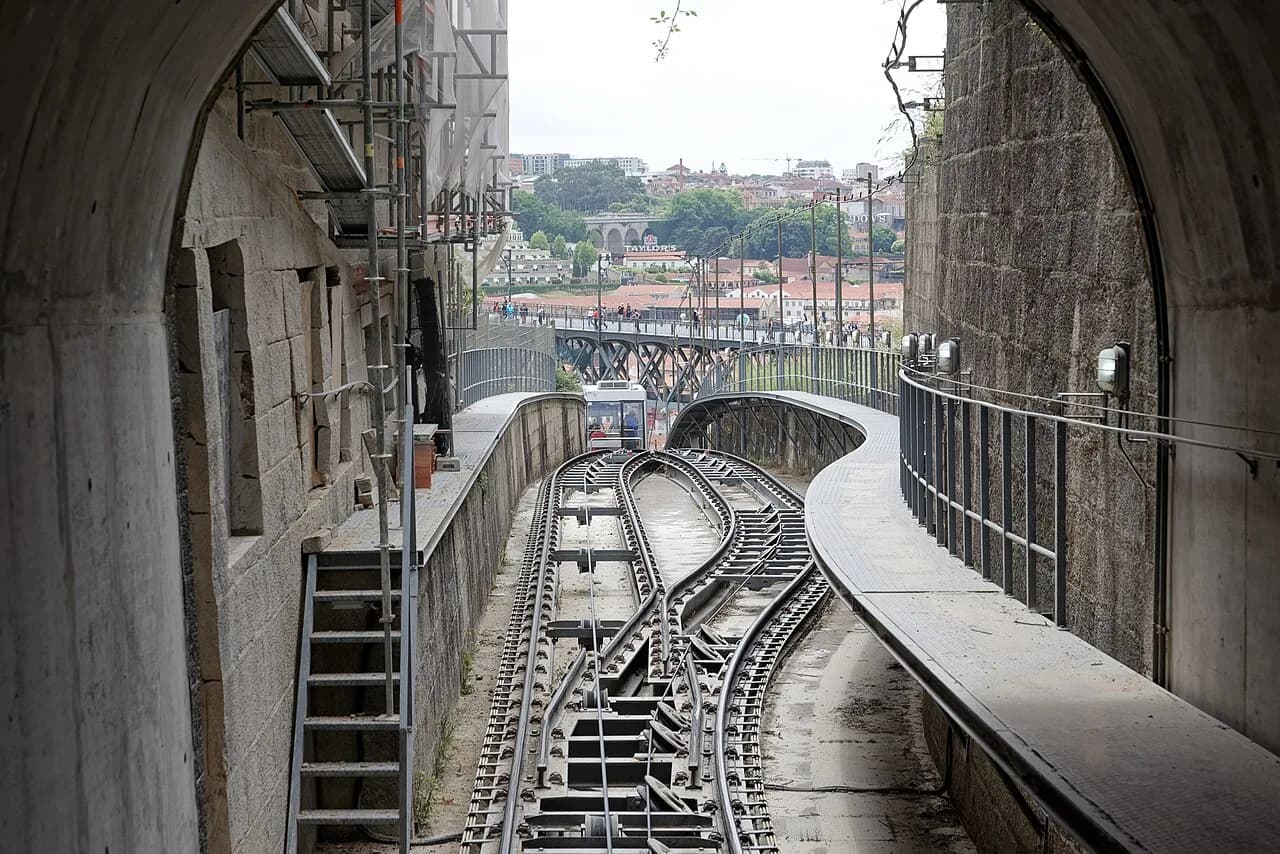
Last updated September 2026, this Porto funicular guide leads with the operator's current notice: the Funicular dos Guindais is temporarily closed for maintenance. Do not depend on it for the climb between Ribeira and Batalha. Below are the published ticket details for future planning, the correct station locations, and alternatives while the line is unavailable.
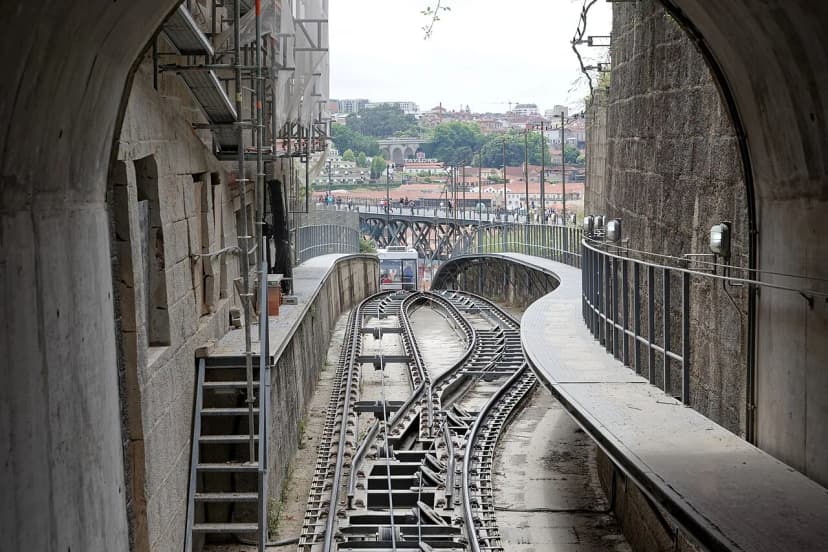
Featured image: Guindais track and passing loop, photographed before the present closure, by Jakub Hałun, CC BY 4.0, via Wikimedia Commons. Resized and converted to WebP.
Is the Porto Funicular Running Right Now?
No: when checked on 12 September 2026, STCP Serviços' own funicular page explicitly says it is temporarily closed for maintenance. The page does not give a reopening date. Its normal timetable remains visible, but that timetable does not override the closure notice. Build a plan that works without the ride, especially if you need help with Porto's hills or have a timed train to catch. A travel guide showing fares, a promotional video, or a map listing the station is not evidence that service has resumed. For a later visit, look for an operator update before adding the funicular back into the itinerary. If the page is unclear, use STCP Serviços' contact details. This organisation manages the mechanised links and terminals; the similarly named STCP city-bus operator has a different customer-service contact.
Where the Porto Funicular Runs: Ribeira to Batalha
The two stations are on the Porto side of the Douro, not across the river in Vila Nova de Gaia. Portugal's official accessible-tour information places the lower Ribeira entrance on Avenida Gustave Eiffel and the upper Batalha entrance on Rua Augusto Rosa. STCP Serviços gives the address Rua da Ribeira Negra 314. Use those streets to identify the correct end of the line. The upper station is in the Batalha area; it is not a platform opening directly into Praça da Batalha or a shared boarding point with tram 22. The operator describes a track about 281 metres long with a rise of about 61 metres. That vertical difference is why a short line on a map can represent a demanding walk. When planning from São Bento station, check the street route to your actual destination rather than treating the funicular as an automatic station-to-hotel transfer. A short riverside visit in Porto and a journey into the Douro Valley need different time budgets; our Régua train guide explains the latter as a separate excursion.
Cost and Tickets: The Operator's Published Fare Sheet
The fare sheet linked by STCP Serviços lists the prices below. They are published tariff information, not confirmation that tickets are currently being sold or that service has reopened. The sheet also lists separate combined tickets for the funicular and Elevador da Lada. Only compare that bundle if both links are operating and both match your route; a combined ticket does not make their endpoints the same. For a simple uphill journey after reopening, compare the single with your intended return plan. Buying a return solely because it is discounted is poor value if you plan to walk back by another route. Confirm accepted payment methods and the current tariff at the station before paying; the sheet's warning about change above €50 is not proof of a cash-only policy.
| Published ticket | One way | Return |
|---|---|---|
| Adult | €4 | €6 |
| Child, ages 4–12 | €2 | €3 |
| Porto Card adult discount | €3 | Not specified in this row |
| Porto Card child discount | €1.50 | Not specified in this row |
Andante and Porto Card: Which Rules Are Different?
The operator's fare sheet lists free travel for monthly Andante subscriptions including zone PRT1. That is not the same as holding a Blue card with a few occasional metro tickets. It separately lists Cartão Porto. and Porto Premium 3 em 1, while the tourist Porto Card has discounted single fares. Similar names should not be treated as interchangeable entitlements. The Porto Card guide explains why current tourist-card purchase availability is still unconfirmed. Do not buy a sightseeing product just to obtain a discount on a closed attraction. STCP's 2026 transport fare sheet explicitly excludes the funicular from Andante Tour. For ordinary journeys elsewhere in the city, use the metro ticket guide to select and validate the appropriate product. None of these ticket rules overrides the present closure.
Hours and Frequency: Normal Schedule, Not Current Service
The operator still publishes seasonal hours: April–October 08:00–22:00 Sunday–Thursday and 08:00–midnight Friday–Saturday; November–March 08:00–20:00 and 08:00–22:00 respectively. These describe the normal timetable, not open hours during the current maintenance closure. Its fare sheet gives a ten-minute frequency. A scheduled interval is not a maximum queue time: missed departures, capacity and boarding needs can all add time. For a future evening ride, verify the applicable date and last boarding rather than aiming to reach the entrance at closing time. For now, arrange the uphill return by another means before descending to the river. A pleasant downhill walk can conceal how much effort the reverse journey will take, especially after dinner or in hot weather.
Walking Alternatives While the Funicular Is Closed
Choose between a stair-based route and a longer street route according to your mobility, luggage and remaining energy. The Escadas dos Guindais follow the steep hillside, but they are not a step-free substitute. A route back through the central streets toward São Bento can fit a wider self-guided walking tour, though avoiding stairs does not remove gradients. Check the complete street route and allow for stops; this guide does not promise a universal fifteen-minute climb. Wet paving, heat, a stroller or a suitcase can change the practical choice. If the climb would be difficult, arrange a taxi or suitable vehicle to an accessible pickup point and confirm where it can stop. Do not assume that a vehicle can enter every narrow lane beside the river. Another option is to keep sightseeing on one level and postpone the hillside connection, rather than forcing a replacement ride into the day.
Accessibility and Practical Planning
Visit Portugal describes ramps, lifts and level boarding at the funicular's stations, but those facilities cannot supply a journey while the line is closed. Anyone relying on step-free travel should confirm both station access and actual service after a reopening announcement. Ask about the whole journey, including pavement access at the destination, rather than just whether a cabin can accept a wheelchair. The operator's published use rules provide priority arrangements and require space to be available for bicycles. Priority does not guarantee immediate boarding or an empty cabin. Let arriving passengers exit before entering and follow staff instructions. For luggage, keep a direct road-transfer option in mind if the street walk from a station to your accommodation is the main difficulty. Planning that connection before arrival is more useful than discovering the closure at the bottom of the hill.
Guindais, Gaia Cable Car and Elevador da Lada Are Different
The Gaia Cable Car's operator identifies its upper station at Jardim do Morro and lower station at Cais de Gaia. Both are across the Douro from Porto's Guindais line. A ride there may fit a Gaia outing, but it does not replace the Porto-side climb between Ribeira and Batalha. Elevador da Lada is another separate link: the operator's regulations describe Ribeira–Barredo, not the full Guindais route. Check its own operation and access if considering it as part of a walk. Likewise, heritage tram 22 tours the upper central area rather than descending the Guindais track. Allow a street walk between the tram and the upper funicular entrance if combining them after reopening. For the wider choice of metro, buses and walking, use the Porto public transport overview and check current operator alerts for the particular route you choose.
Frequently Asked Questions
Is the Guindais Funicular open in September 2026?
STCP Serviços marked it temporarily closed for maintenance when checked on 12 September 2026. The operator page gives no reopening date. Its displayed normal timetable does not mean the line is currently running.
How much does the Porto funicular cost?
The operator-linked fare sheet lists adult tickets at €4 one way or €6 return, and ages 4–12 at €2 or €3. These are published prices during a closure, not proof that service or ticket sales have resumed.
Does Andante include the Porto funicular?
Ordinary occasional tickets and Andante Tour do not. The funicular fare sheet lists free travel for monthly Andante subscriptions including PRT1. Verify the exact entitlement after reopening; a Blue card alone is not a monthly pass.
Where are the Guindais funicular stations?
The lower Ribeira entrance is by Avenida Gustave Eiffel and Rua da Ribeira Negra; the upper Batalha station is on Rua Augusto Rosa. Both are on Porto's side of the river.
Can you walk instead of taking the funicular?
Yes if the climb suits your mobility, but the hillside includes steep gradients and stair routes. Do not treat it as a step-free or universally fifteen-minute alternative. Check a street route or arrange suitable road transport if needed.
Is the Gaia Cable Car an alternative to Guindais?
It serves a different route on the opposite side of the Douro, linking Jardim do Morro and Cais de Gaia. It does not replace Porto's Ribeira–Batalha connection.