Europe Nook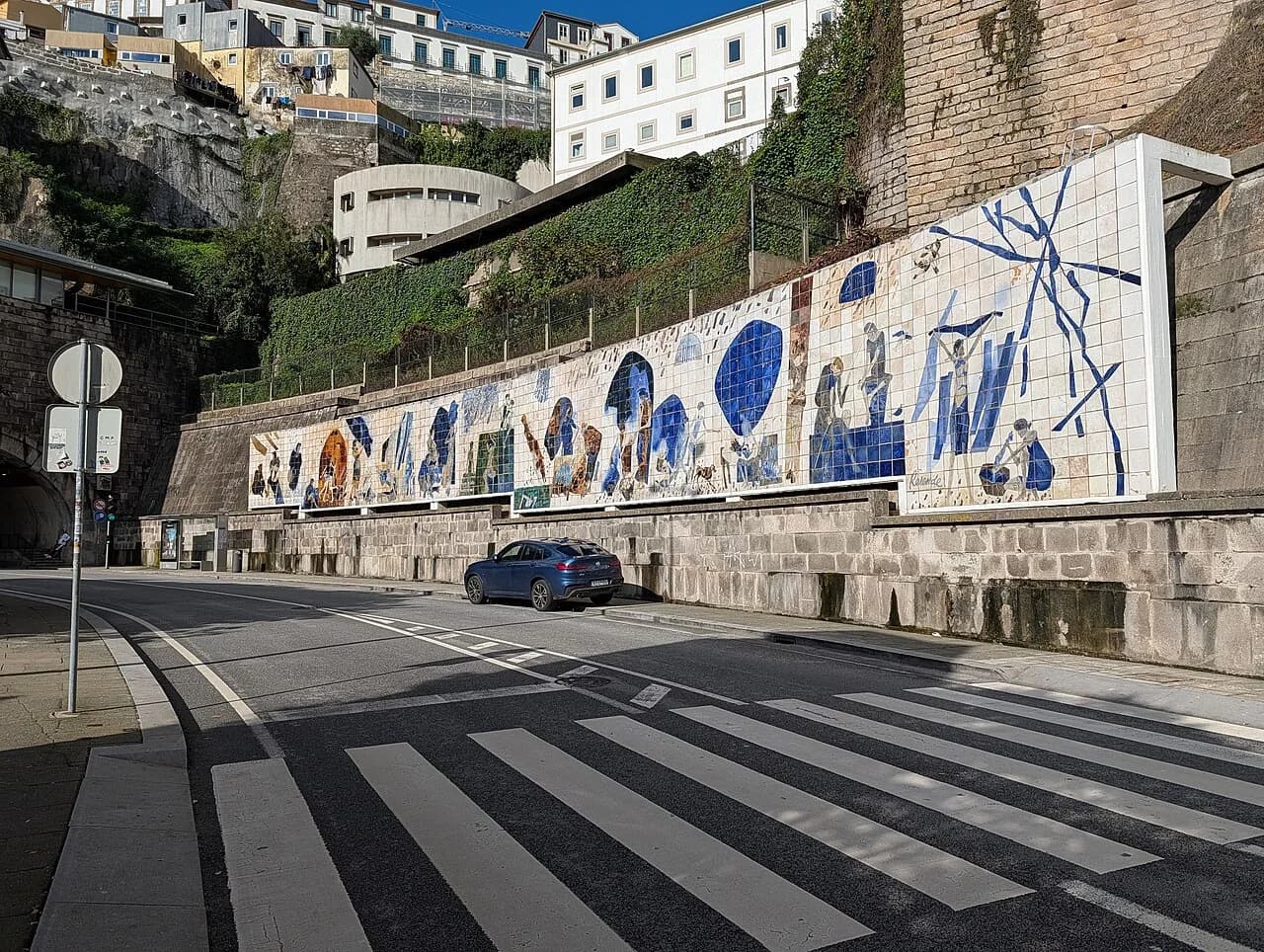
Last updated September 2026, this Porto self guided walking tour links the central squares, Clérigos, São Bento and Sé before descending to Ribeira. It is a point-to-point itinerary, not a loop and not an entirely downhill walk. Allow roughly two to three hours for the exterior-focused version as an editorial planning estimate, then add time for any interiors. Reviewed on 12 September 2026: the Guindais funicular is closed for maintenance, so it cannot currently replace the stepped descent. If you have another day for a historic-centre walk outside Porto, consider the travel and last-mile plan in our Guimarães train guide.
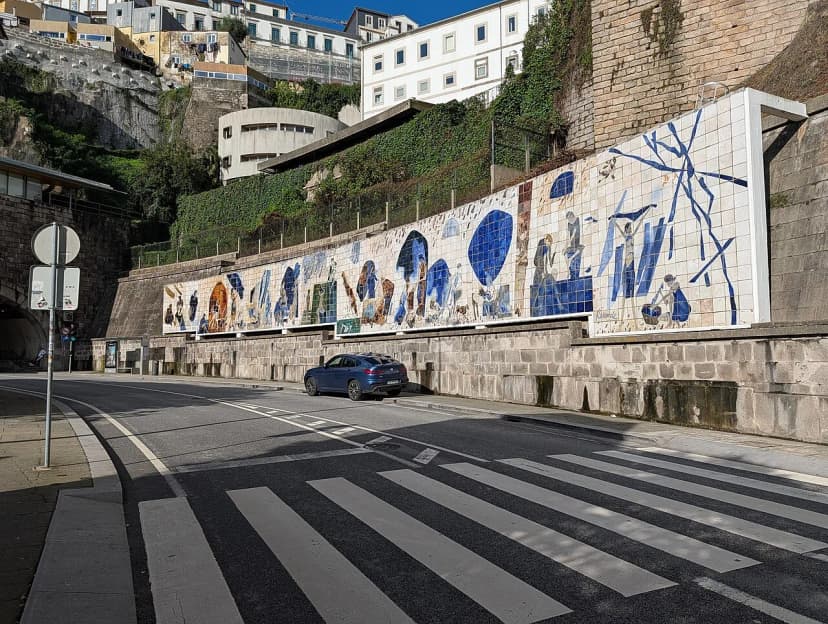
Ribeira Negra mural beneath Porto's old-town hillside. Photo: _morgado2, CC BY 4.0, via Wikimedia Commons. Resized and converted to WebP.
Porto Self-Guided Walking Tour at a Glance
Start at Praça da Liberdade and finish at Praça da Ribeira beside the Douro. The route deliberately visits the higher landmarks before its final descent, but still climbs toward Clérigos and again from São Bento to Sé. It is suitable for independent walkers comfortable with hills, cobbles and steps; it is not a verified step-free itinerary. Booked attraction slots, weather and walking pace should determine how much you include.
- Start: Praça da Liberdade; Aliados and São Bento are nearby metro options, depending on your approach.
- Finish: Praça da Ribeira, below the city-centre metro stations.
- Core route: Clérigos, Carmo, Lello exterior, São Bento, Sé, upper bridge viewpoint and Ribeira.
- Timing: allow two to three hours for exteriors and brief stops, excluding queues, meals and paid visits.
- Optional extensions: São Francisco and Palácio da Bolsa west of Ribeira, or a separate Gaia visit.
Full Itinerary: Praça da Liberdade to the Ribeira Waterfront
Use these stops in order on a pedestrian map. This is our suggested route, not an official signed trail or surveyed distance. Follow any local construction diversions and never assume a map's shortest path avoids stairs.
- Praça da Liberdade: begin at the southern end of Avenida dos Aliados. Check your next booked admission before setting off; a Lello slot may justify starting with that stop instead.
- Clérigos: walk uphill west along Rua dos Clérigos toward the church and tower. The exterior is part of the free walk; entering the tower is a separate paid visit with a substantial staircase. The operator's architectural guide describes the climb and buildings.
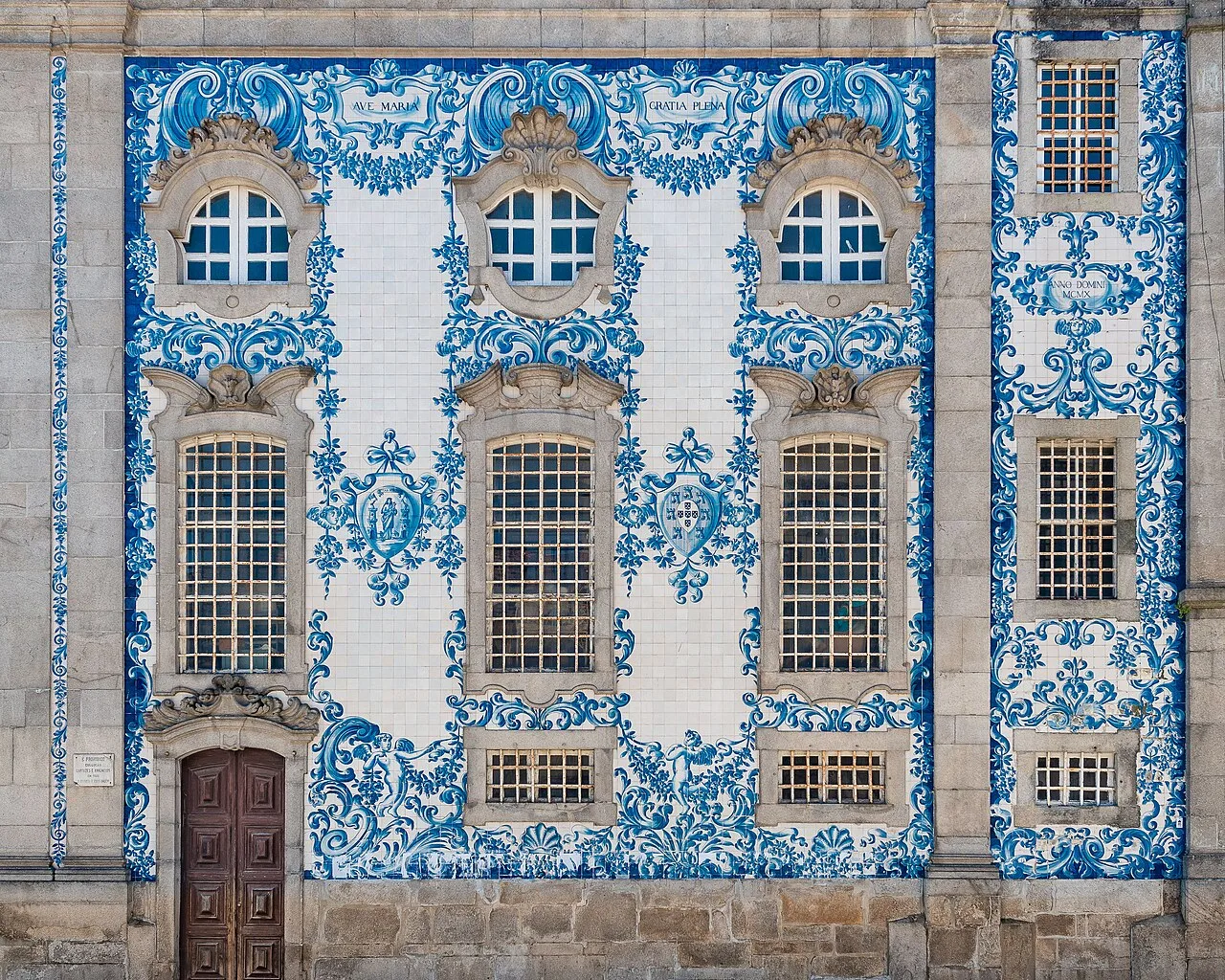
- Igreja do Carmo: continue toward Praça de Gomes Teixeira for the tiled side wall and neighbouring Carmelitas church. View the exterior from the public space without assuming access to the churches or the narrow house between them is included.
- Livraria Lello: return along Rua das Carmelitas to the bookshop. Keep this as an exterior stop unless you have arranged admission through Livraria Lello's own ticketing links. A visit inside changes the walking timetable.
- São Bento: descend via Rua dos Clérigos and Praça da Liberdade to Praça de Almeida Garrett. The São Bento railway station entrance hall is the tile-viewing stop, not the separate underground metro station. Keep clear of passengers, entrances and departure displays.
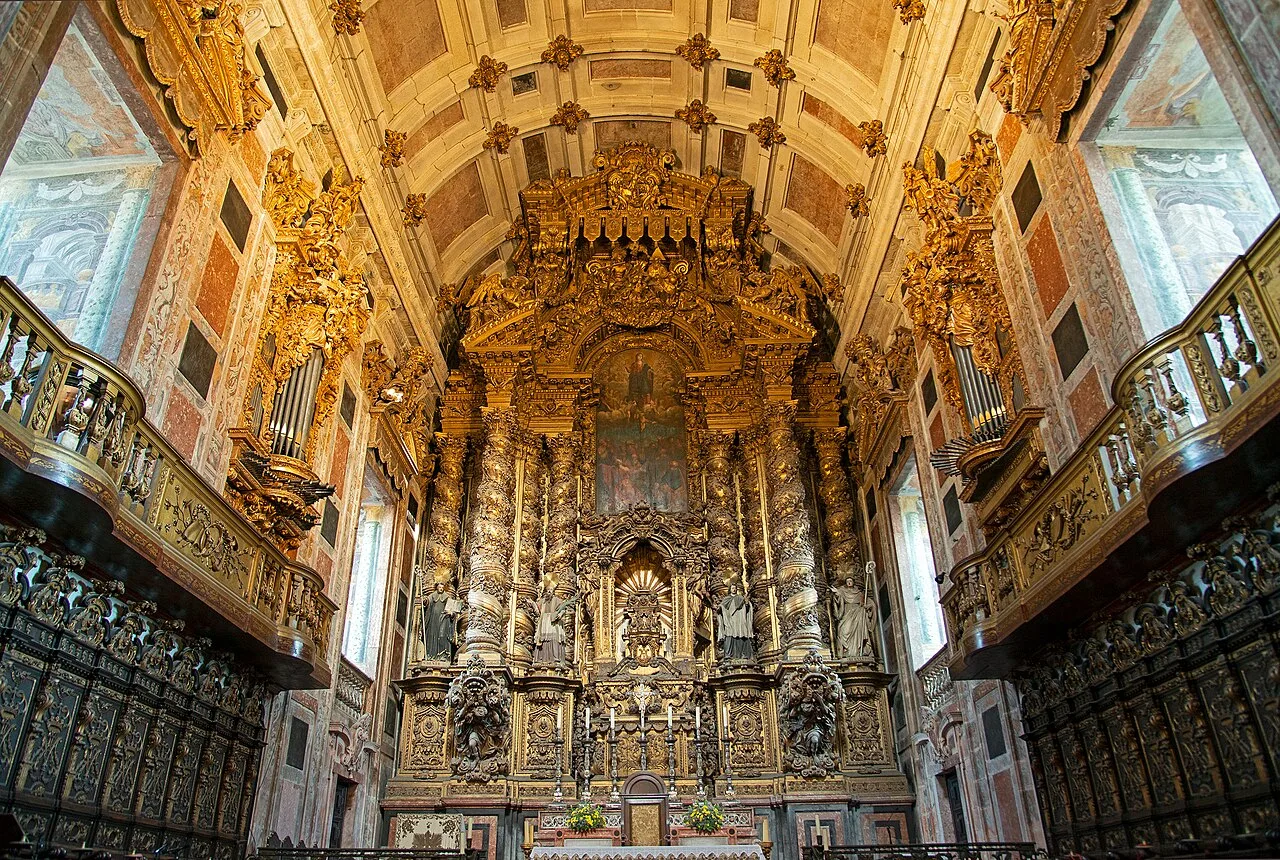
- Sé Cathedral: climb from São Bento toward Terreiro da Sé. Stop in the outdoor square for the façade and rooftops; do not assume a tourist visit to the interior, cloister or tower is free. The city's cathedral listing identifies the monument.
- Dom Luís I Bridge: continue toward Avenida de Vimara Peres and the Porto approach to the upper deck. Walk onto the pedestrian space for the view if conditions suit, then return to the Porto bank. Keep off the metro tracks and do not stop in the path of other pedestrians.
- Descent through the old town: return toward Sé and follow the pedestrian lanes and stairs through Barredo toward Ribeira. Preview this section on your map before committing. The Guindais funicular is currently closed, not an available shortcut.
- Praça da Ribeira: finish on the Porto waterfront. Take a break here or continue west to the optional Bolsa and São Francisco stops below. Returning to Aliados or São Bento means going uphill again; the route does not quietly turn into a loop.
How Long It Takes and the Short Two-Hour Version
The time allowances below are planning judgments, not measured walking records or guaranteed completion times. Crowds, photographs, gradients and ticket queues can add considerably. Do not use a two-hour sightseeing estimate as the entire buffer before a flight, cruise boarding or reserved train. The route's exact distance also depends on which stepped lanes and bridge turnaround you choose.
| Version | Planning allowance | What to leave out |
|---|---|---|
| Short route: São Bento, Sé, upper bridge view and Ribeira | Around two hours with brief stops | Clérigos–Carmo loop, paid interiors and Gaia |
| Full exterior-focused point-to-point route | Around two to three hours | Paid interiors, meals and long queues |
| Route with one or two interiors and a meal | Half a day or longer | Do not add every optional attraction automatically |
Costs and Tickets: Free Exteriors Versus Paid Visits
You can follow the public-street itinerary without buying an attraction ticket. Meals, transport and optional interiors are extra. Check each venue's current ticket product rather than adding unrelated reseller prices or assuming the same admission rules apply everywhere.
| Stop | Core walk | Optional interior |
|---|---|---|
| Clérigos | Exterior | Paid tower/museum visit; stairs to the viewpoint |
| Carmo and Lello | Public-street exterior views | Check the venue's admission product and booked slot |
| São Bento | Tiled entrance hall | Do not enter railway platforms merely for sightseeing |
| Sé | Outdoor square and façade | Confirm tourist-route coverage and price at the cathedral |
| São Francisco | Optional exterior extension | Church/museum visit: verify current ticket inclusions |
| Palácio da Bolsa | Optional exterior extension | Guided visit; official individual price €14 at review |
Getting to the Start and Away from the Finish
Aliados and São Bento are useful metro approaches to Praça da Liberdade; Trindade is farther north, not universally the closest station. From the airport, Line E normally provides the connection toward Trindade, followed by a walk or onward connection. See the airport transfer guide for current ticket and service details.
Long-distance rail arrivals commonly use Campanhã. Check your ticket and the railway station guide before assuming your train reaches São Bento. Coach arrivals should use the precise stop printed on their ticket; the bus terminal guide explains Campanhã and other terminals.
From Ribeira, central metro stations require an uphill approach. Check a suitable city bus or arrange a taxi pickup on an accessible vehicle street if you do not want that climb. Read the zone guide and ticket guide before travelling: Andante covers participating services and specified zones, not every vehicle or tourist ride.
Historic tram 1 normally links Infante with Passeio Alegre along the river. It is an optional westbound extension, not a return service to Aliados, and ordinary Andante occasional tickets do not cover it. Compare alternatives in the Porto transport overview.
Slopes, Steps and the Closed Funicular
The main walking challenge is not a single climb near the end. The route rises toward Clérigos, drops toward São Bento, climbs to Sé and then descends steeply to the river. Wet or polished stone can be slippery; choose footwear with grip and allow breaks. The upper bridge connects the higher banks while the lower deck connects the waterfront areas, so pinning only the bridge's name on a map can send you to the wrong level.
At the September 2026 review, STCP Serviços explicitly marks Funicular dos Guindais temporarily closed for maintenance, without a reopening date. Do not plan to use it to bypass the steps. Street alternatives can avoid a particular staircase but still involve steep gradients, crossings and uneven surfaces; they are not automatically wheelchair-accessible.
For a wheelchair user, a stroller or anyone who cannot manage sustained inclines, split the day into separate upper-centre and waterfront visits and verify an accessible transfer. Confirm vehicle availability, pickup access and the attraction entrance individually. A bridge viewpoint alone does not make the whole route step-free.
Booking Times, Weather and September Service Exceptions
Build the walking order around any timed admission rather than expecting an early start to guarantee an empty bookshop. Lello's visitor guidance suggests lunchtime and late afternoon for lower attendance, but that is not a queue guarantee. Its legacy visitor page and current homepage show different closing times; use the current ticket/date information before committing to a late visit.
In rain, reduce the stepped descent and exposed bridge time if the surface or visibility is poor. São Bento's hall and booked museum interiors can form a shorter visit, but indoor attractions still have admission limits and closures. Do not treat a wet-day suggestion as proof that an attraction is operating.
- The previously reported central-corridor works applied from 22:00 on 12 September to noon on 13 September 2026. That window has passed. Check Metro do Porto’s latest service information for your date; a historical replacement-bus frequency or validation instruction does not establish the arrangements for a different disruption. Relevant planning information: dated Metro notice.
- The half-marathon service changes on 13 September 2026 were date-specific and have expired. Check current STCP notices before planning a tram or riverside bus journey; do not carry those historical cancellation times into a new itinerary. Relevant planning information: current STCP service notices.
Optional Extensions Without Turning the Walk into a Loop
For a nearby heritage extension, head west from Ribeira to São Francisco and Palácio da Bolsa. The Order of São Francisco's own site describes its church and museum buildings. Choose an interior visit only after checking admission and the time available; do not assume a combined ticket covers every space during your visit.
For Mercado do Bolhão, visit before beginning the main route or on another outing. It is uphill and away from the Ribeira finish. The market's official FAQ lists Monday–Friday 08:00–20:00, Saturday 08:00–18:00, and closure on Sundays and holidays; restaurants have separate hours. A Sunday walk should not advertise it as an open final food stop.
For Gaia, cross the upper bridge toward Jardim do Morro as a separate extension. Reaching the Gaia waterfront then means another descent and a return-plan decision. A cellar tour adds its own location, booking and duration. Save it for a separate block of time instead of claiming that the complete Porto route, every interior and Gaia all fit a fixed afternoon.
Frequently Asked Questions
How long does this Porto self-guided walking tour take?
Allow roughly two to three hours for the exterior-focused route, excluding meals and paid visits. This is an editorial planning estimate, not a measured or guaranteed duration. The shorter São Bento–Sé–bridge–Ribeira version can suit a roughly two-hour sightseeing window.
Where does the route start and finish?
The full route starts at Praça da Liberdade and finishes at Praça da Ribeira. It is point-to-point, not a loop. Returning to the central metro stations adds an uphill walk or a separate transport connection.
Is this Porto walking route entirely downhill?
No. It climbs toward Clérigos and again from São Bento to Sé before descending to Ribeira. The descent includes steps and uneven stone, so the route is not verified step-free.
Can I use the Guindais funicular instead of the stairs?
Not at the 12 September 2026 review: STCP Serviços marks it temporarily closed for maintenance without a reopening date. Check the operator before travelling and arrange another transfer if you cannot manage the descent.
Do I need to book attractions for the walk?
No booking is needed for the public-street exterior route. For Lello, follow its current ticketing process and admission instructions. Palácio da Bolsa requires a guided visit, with timing and language subject to its visitor arrangements; allow waiting time rather than assuming an immediate tour.
Can I finish at Mercado do Bolhão on Sunday?
The main route finishes at Ribeira, not Bolhão. The market's official FAQ lists Sunday and holiday closure. Visit it before the walk on an opening day or plan it separately.